Assembly launch · No. 22
18 documented steps. Three critical-to-quality gates.
A diagnostics developer’s cartridge build was turned into documented assembly and inspection another team could perform. Read the case
RELYQuality management·ISO 9001:2015 CertifiedCertificate 263741
ISO 9001:2015 Certified Quality Management System
RELY’s quality management system is built to keep operational control as production complexity, workforce scale and customer demands increase. It is certified to ISO 9001:2015 for contract manufacturing and assembly.
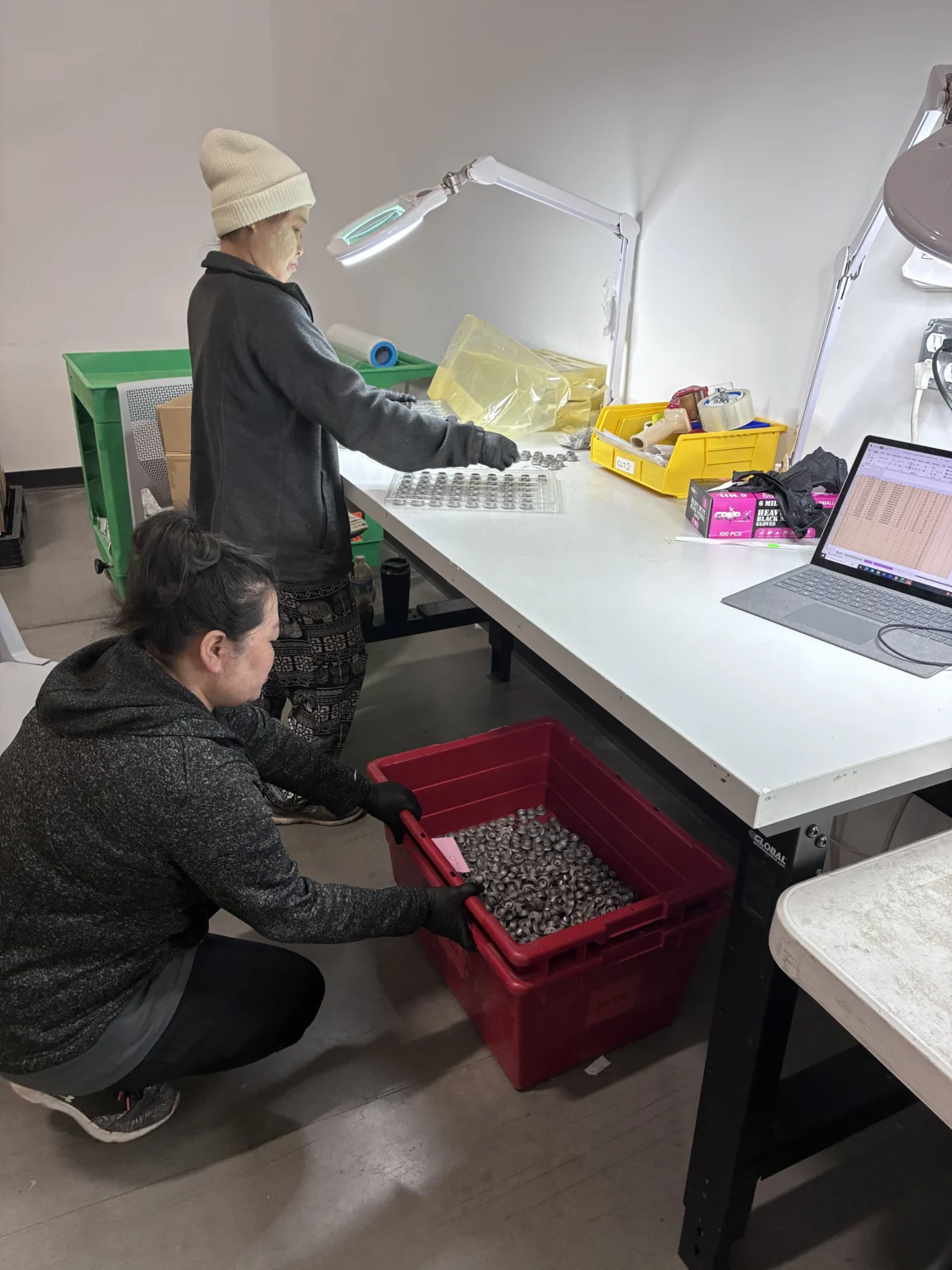
Inspection and containment · RELY floor
Certified QMS
ISO 9001:2015
Certificate 263741, contract manufacturing and assembly, issued by Amtivo (USA) Inc.
Sortation | Calendar 2025
62M+
Parts processed through RELY sortation and containment programs in 2025
Fastest documented
4-Hr
Fastest documented sort deployment. Actual timing depends on scope, location and criteria
Urgent response
1 hr
Response to urgent sortation and containment inquiries, within one business hour
From RELY production records and the Amtivo ISO 9001:2015 certificate. Sortation volume and response figures describe sortation and containment work only; they are not capacity or delivery commitments for other services.
For supplier quality and procurement
Use these details for supplier setup, approved-vendor lists and supplier surveys. The current certificate is available as a PDF.
Customers, prospective customers and auditors can request a controlled copy of RELY’s Quality Manual through RELY’s contact page.
| Item | Current record |
|---|---|
| Standard | ISO 9001:2015 |
| Certificate number | 263741 |
| Scope | Contract Manufacturing and Assembly |
| Certified organization | Rely Contract Manufacturing, N59 W13401 Manhardt Drive, Menomonee Falls, WI 53051 |
| Certification body | Amtivo (USA) Inc. |
| Initial certification | March 20, 2024 |
| Latest issue | February 26, 2026 |
| Valid through | March 19, 2027, subject to annual assessments |
Where quality problems start
They build upstream, where standards, records and escalation paths are unclear, execution varies between shifts, traceability is incomplete or variation is not controlled. As complexity increases, those gaps become more exposed. Volume does not create quality problems. Unclear systems do.
Standards, records and escalation paths are unclear.
Operators, shifts and runs do the work differently.
Output drifts as volume and product mix grow.
Defects surface downstream, where they cost the most.
Where systems strain
Variation increases execution risk as program count and product diversity grow.
Issues surface late and disrupt production timelines downstream.
Execution varies between operators, shifts and runs when the method lives in people’s heads.
Problems are found too late in the process to contain efficiently.
Scaling labor on compressed timelines introduces inconsistency.
Root causes are addressed temporarily instead of being eliminated.
The RELY approach
Quality controls are engineered into training, verification, traceability and escalation across the production environment, not added at the end of the line.
Process flow, risk review and control plan before volume.
Picture work instructions and pass/fail references at the cell.
Training and sign-off against the specific work.
First-piece, in-process and layered process audits.
Lot and operator records tied to the work order, and audit-ready results across shifts.
Structured program launch
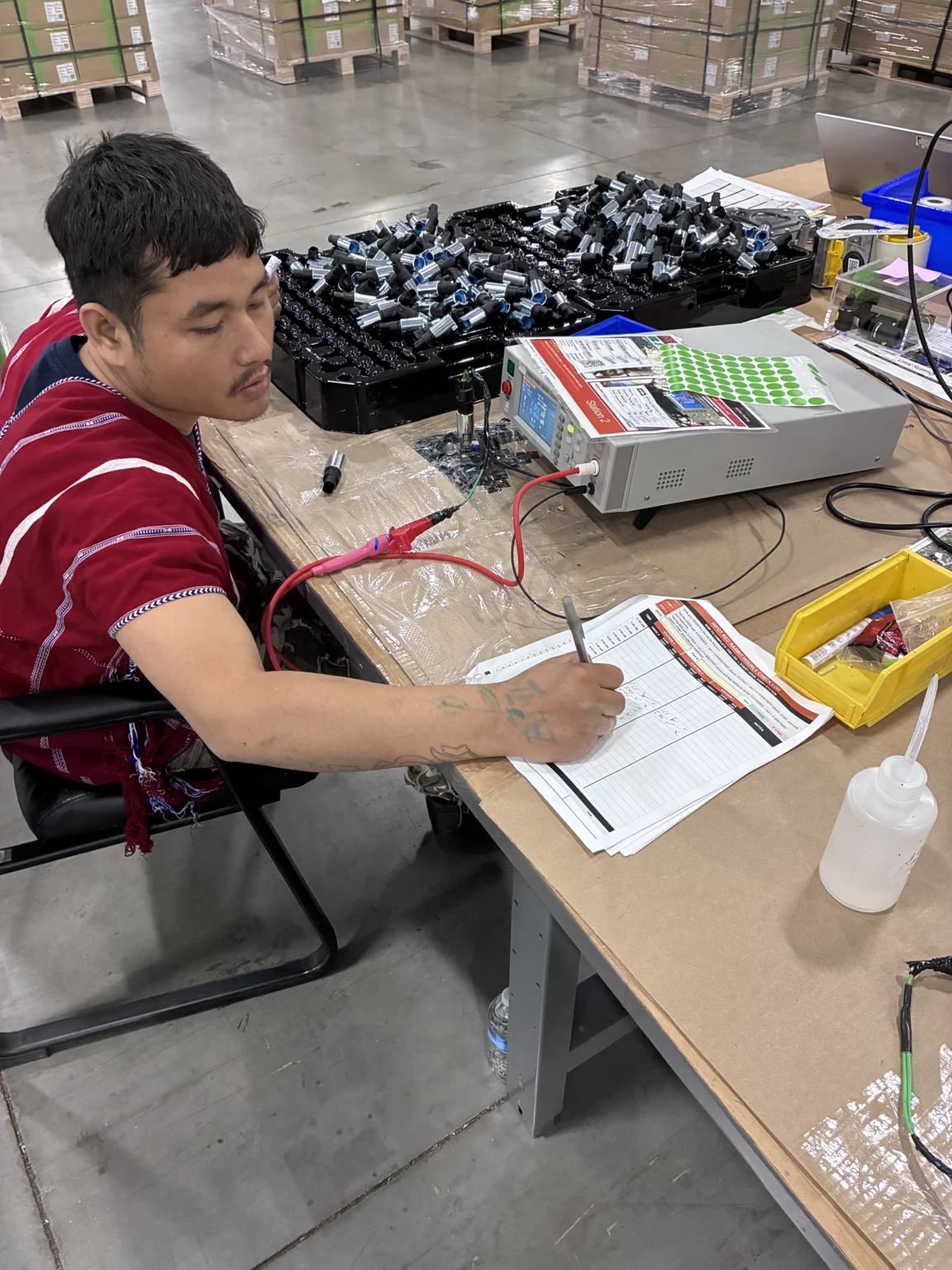
Every program starts with a defined operating structure before production activity begins. The goal is to remove variation before volume increases, not after problems surface.
Execution clarity
01
Step-by-step visual guidance reduces interpretation and standardizes output across shifts.
02
Pass/fail references at the point of execution, so operators see acceptable and unacceptable conditions side by side.
03
The cell is set up the same way every shift, regardless of who is running it.
Workforce architecture
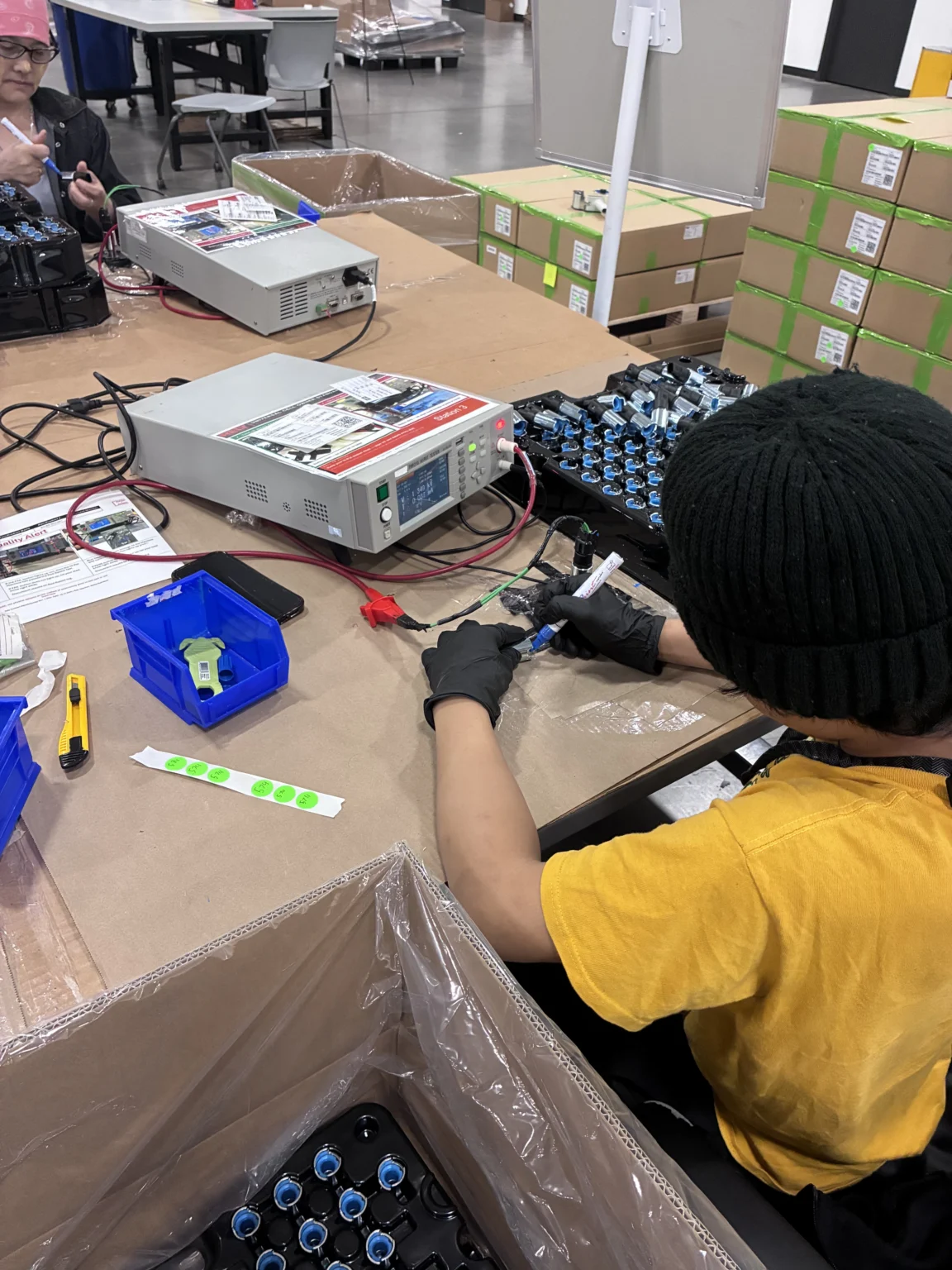
RELY assumes workforce composition will change as programs grow, and builds the system to stay consistent through that change.
01 · Process-specific
Operators are qualified on the specific work before running it independently.
02 · New-operator gate
A new operator’s first parts are verified before the run continues.
03 · Continuous
Checks built into the process, not only at the end.
04 · Multi-tier
Leaders at several levels verify that the standard is being followed.
05 · Accountability
Records show who did the work and who verified it.
The RELY advantage
Because RELY runs high volumes of sortation, testing, containment and rework, its teams are continuously exposed to defects, variation and their downstream consequences. That exposure changes how operators execute production work: quality awareness sits inside execution, not only at inspection.
On the floor
Quality in assembly, kitting and packaging
Documented steps, built-in checks and validation before full rate. Four recent programs show how that works outside sortation.
Assembly launch · No. 22
A diagnostics developer’s cartridge build was turned into documented assembly and inspection another team could perform. Read the case
Kitting · No. 11
Kit-weight and bag-seal checks were built into the work instruction for a 300,000-kit hardware program, completed in full. Read the case
Contract packaging · No. 10
Across 30,000+ three-flavor variety packs, March to September 2026, with date control and mix control built into the packing process. Read the case
Managed on-site kitting
A 1,120-kit labeled validation run passed audit before full-rate restart on a 132,115-kit managed program. Read the case
Program figures from the published case studies. Results describe those programs; they are not capacity or delivery commitments.
Qualifying RELY as a supplier
Need a supplier survey or quality questionnaire completed? Send it with your inquiry and RELY’s quality team will respond.
Tell us what you are facing. RELY will help identify where operational risk sits and how to reduce it. Parts on hold right now? Call 262.853.1634.