Industrial, Manufacturing & Material Handling Equipment
Industrial contract assembly and production transfers.
RELY Contract Manufacturing builds equipment subassemblies, runs production transfers and service-part programs, and handles line-side kitting, inspection and supplier rework for OEMs that make industrial, manufacturing, material handling and electromechanical equipment. The aim: get labor-intensive, high-mix or non-core work out of your primary production system without losing control of it.
Supplier parts failing spec right now? Call the containment line: 262.853.1634.
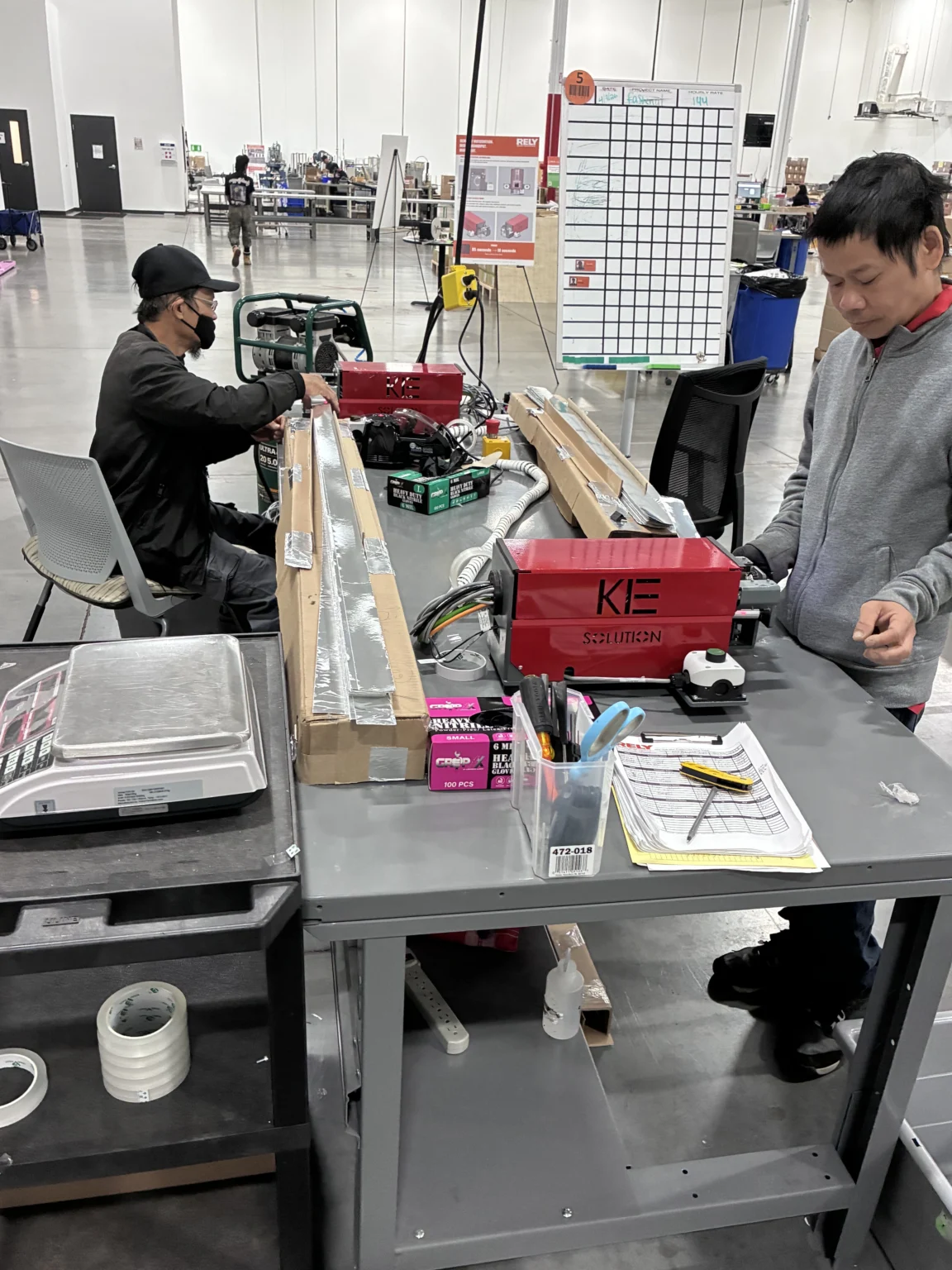
Assembly workstation · RELY floor
At a glance
What RELY does for industrial OEMs.
Transfer the supporting work that competes with your main build: option-heavy subassemblies, mature product families, service parts and line-side kits. The scope can also include component follow-up, inventory and inspection.
- Serves
- OEMs building industrial, manufacturing, material handling, thermal and power equipment
- Lead services
- Contract assembly and subassembly, production transfers
- Also
- Industrial kitting, supplier containment and rework, service parts, electrical assembly
- Materials
- Customer-supplied, RELY-procured or a hybrid, defined in the quote
- Customers
- RELY’s industrial customer programs include ITW, Husco and Modine
- Credentials
- ISO 9001:2015 certified. 52,000 sq ft in Menomonee Falls, Wisconsin
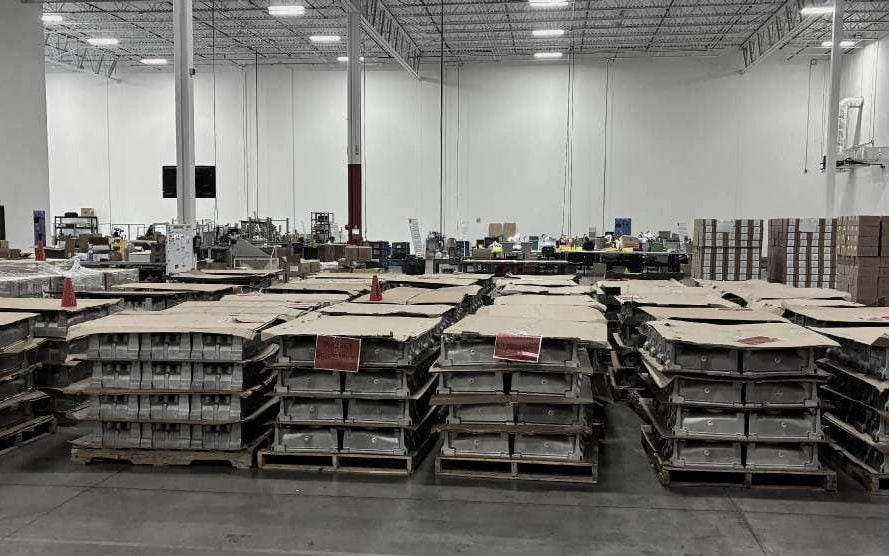
Proof · Case No. 18 · Power systems equipment
More than half the castings failed spec. The line never stopped.
- Starting problem
- A global industrial OEM asked for inspection support on an offshore aluminum head casting. Early containment showed more than half of incoming parts failing specification across four failure modes.
- What RELY owned
- 100% incoming inspection of the machined features, rework to print, and sourcing and managing three outside machine shops on the customer’s behalf.
- What RELY did
- Designed and procured custom gauges for bushing ID and press depth, built custom machining tooling for the rework, standardized inspection criteria, segregated conforming, nonconforming and reworked material, and kept traceability as new defect modes appeared.
- Result
- 2,500+ parts inspected and reworked, critical features restored to specification, and no line stoppage at the customer’s U.S. plant during the program.
- Why it matters
- Industrial supply problems rarely stay inside the quality department. RELY handled the inspection, the rework and the supply chain behind them.
- 2,500+
- Parts inspected and reworked
- 100%
- Inspection rate maintained
- 0
- Line stoppages at the customer’s plant
- 3
- Outside machine shops managed
“RELY didn’t just inspect parts, they stabilized our supply chain and kept our production line running.” Client quality engineer, as published in Case Study No. 18.
Source: RELY Case Study No. 18. Figures apply to this program only.
Non-core work, bottlenecks and transfers
Your primary line should build your primary product.
Most industrial OEMs carry work that matters to customers but does not belong on the main line: mature product families, service parts, option-heavy subassemblies and equipment-based processes that run a few days a month. RELY takes that work as a defined program in Menomonee Falls or, for suitable programs, inside your plant under RELY’s on-site labor model.
The transfer can include more than assembly labor. Depending on the agreed scope, RELY can take on component follow-up, inventory, staging, work instructions, operator training, inspection and the finished-subassembly release schedule.
Work that can move
- Option and configuration subassemblies
- Mature and legacy product families
- Service and aftermarket parts
- Kitting and line-side preparation
What moves with it
- Customer-owned equipment and fixtures
- Drawings, BOMs and revisions
- Test requirements and gauges
- Open demand and inventory
How supply is protected
Depending on the program: a pilot build, staged part-number transfers, parallel production or advance inventory, with first-article approval and a defined cutover.
Why industrial OEMs call RELY
When supporting work constrains the main line.
01 · Skilled labor
Subassemblies compete with your main build.
Experienced assemblers are tied up on subassemblies that could be built to a print somewhere else.
First moveMove defined subassemblies to RELY and keep skilled people on final build and test.
02 · Long BOMs
One missing part stops the build.
Hundreds of components from several suppliers, and a single short part holds up a finished piece of equipment.
First moveLine-side kits built and verified to the BOM and revision before they reach the floor.
03 · High-mix disruption
Options break the rhythm.
Low-volume configurations and customer-specific options interrupt the flow of your primary production system.
First moveRun the high-mix work as its own program at RELY.
04 · Supplier failure
A supplier is missing spec or leaving.
A casting, machined part or subassembly supplier is missing specification, missing dates or exiting the program.
First moveContain and rework what you have, then transfer the program if needed.
05 · Aftermarket
Service parts outlive production.
Service and replacement parts for older equipment still need reliable supply after the production line has moved on.
First moveBuild service and aftermarket parts at the volumes they actually run.
06 · Hidden defects
Errors buried inside the build.
A problem inside a subassembly surfaces at final test or in the field, where it costs a teardown or a service visit.
First moveBuild checks into the sequence and test where the product requires it.
Where RELY fits
From subassembly to aftermarket.
Equipment subassemblies and final assemblies.
Mechanical and electromechanical subassemblies, frames, modules and final assemblies built to the approved revision and BOM.
Explore industrial contract assembly → Production transfersMature lines, supplier exits and equipment moves.
Product families, customer-owned equipment and service programs, moved with documentation, suppliers and approvals mapped first.
See how production transfers work → Industrial kittingLine-side and service kits for long BOMs.
Kits built and verified to the BOM and revision for production, installation, service and retrofit, including subassemblies RELY built.
Explore industrial kitting → Supplier containment & reworkCastings, machined parts and purchased components.
100% inspection, custom gauges and rework to print when supplier parts fail, at your plant, the supplier’s or RELY.
Explore supplier containment and rework →Production support during an automation ramp
Your parts are ready. Your automation is still ramping.
An automated cell can be installed and still fall short of the rate or consistency your shipments require. RELY can evaluate manual or semi-manual assembly, secondary operations, kitting and inspection to cover the production gap while your permanent process is completed and stabilized.
01 · Define
Define the gap.
Share the required output, current demonstrated output, drawings, acceptance criteria and expected ramp schedule.
02 · Prove
Prove the bridge.
Establish the work instructions, fixtures, operator training and checks for the proposed process. Confirm feasible output before committing the production plan.
03 · Adjust
Adjust as automation improves.
Set release quantities, review performance and agree how RELY’s work reduces as the permanent process reaches the required rate and quality.
The RELY Automation Bridge resource describes a manual assembly program with an annual volume of 1.9 million units while the customer’s permanent automation was being developed. This is a specific program example, not a capacity commitment for a new project. RELY runs alongside your automation ramp; it does not design or install the automation.
How the work is controlled
Catch it at the station, not in the field.
01 · Documentation
Built to the print, BOM and revision.
Picture work instructions, revision control and an agreed engineering-change path, so a configuration change reaches the floor before the build does.
02 · Verification
Checks inside the sequence.
First-piece, in-process and functional checks where the product requires them, plus custom gauges or fixtures when a feature needs one.
03 · Traceability
Records matched to the program.
Lot, work-order and inspection records at the level your program needs, from finished-product lot to raw material through shipment.
Scope and responsibility
RELY owns the build. You keep design authority.
The defined build, kit or containment.
- Work instructions, training and supervision
- Build, inspection and test within the agreed scope
- Material planning and procurement where agreed
- Care of customer equipment as documented
- Reporting and escalation on the agreed cadence
Design authority and release.
- Product design, specifications and drawings
- Acceptance criteria and release of product
- Engineering changes and deviations
- Ownership of customer equipment and tooling
- Customer and end-user approvals
Questions industrial buyers ask
Short answers. Full answers in the FAQ.
Can RELY take over an equipment subassembly program from another supplier?
Yes. RELY evaluates the existing program and builds a transition plan around current demand, open orders, tooling, inventory, documentation, quality requirements and customer approvals. Pilot builds, staged part-number transfers, parallel production or advance inventory can reduce supply risk during the move.
Full answer: taking over from another supplierCan RELY operate customer-owned equipment and fixtures?
Yes. RELY reviews equipment, tooling, fixtures and test systems for condition, utilities, safety, maintenance, operator training, process capability and facility fit before accepting them. Ownership, maintenance and eventual return or disposition are documented in the program.
Full answer: customer-owned equipmentCan RELY build service and aftermarket parts for older equipment?
Yes. Service parts, aftermarket programs and legacy production fit well when the product still matters to your customers but no longer belongs on your main line. Scope can include manufacturing, assembly, procurement, kits, packaging and fulfillment. Start with one defined SKU group and prove the process before more parts move.
Send a service-parts SKU group for reviewCan RELY inspect and rework supplier castings or machined parts?
Yes. In Case Study No. 18, RELY ran 100% incoming inspection of an offshore aluminum casting, designed custom gauges, reworked parts to print and managed three outside machine shops, with no line stoppage at the customer’s plant during the program.
Full answer: rework instead of scrapDoes RELY assemble control panels and wire harnesses for equipment?
Yes, as part of an equipment program. RELY performs control panel, control box and enclosure assembly to customer drawings, schematics and BOMs, and builds wire harnesses with 100% continuity testing. These usually sit inside a broader assembly, kitting or transfer program.
Full answer: control panels and control boxesCan we supply the components ourselves?
Yes. Programs run on customer-supplied materials, RELY-procured materials or a hybrid. The quote defines purchasing, approved suppliers, inventory ownership, replenishment, shortages, engineering changes and excess or obsolete material.
Full answer: materialsWhat work is slowing your main line?
Name the subassembly, product family or supplier problem. A drawing, a BOM or a photo is enough to start a fit review.
- Assembly or product family
- BOM size
- Annual volume
- Equipment involved
- Target timing
General: 262.276.0050 · info@relycm.com