RELYAcross services·Program transfersProduction transfer
Program transfers · Contract manufacturing
Production Transfers Built Around Your Program
Moving the equipment is the easy part.
Moving production to another manufacturer means transferring more than parts and tooling. The new operation needs the right product definition, materials, suppliers, equipment, quality controls, approvals and production knowledge to keep customer supply moving.
RELY helps manufacturers transfer defined production programs, including assembly, service parts, wire harnesses, customer-owned equipment and related manufacturing responsibility.
Start with the product family, current volume and why the work needs to move. You do not need a complete transfer package to begin.
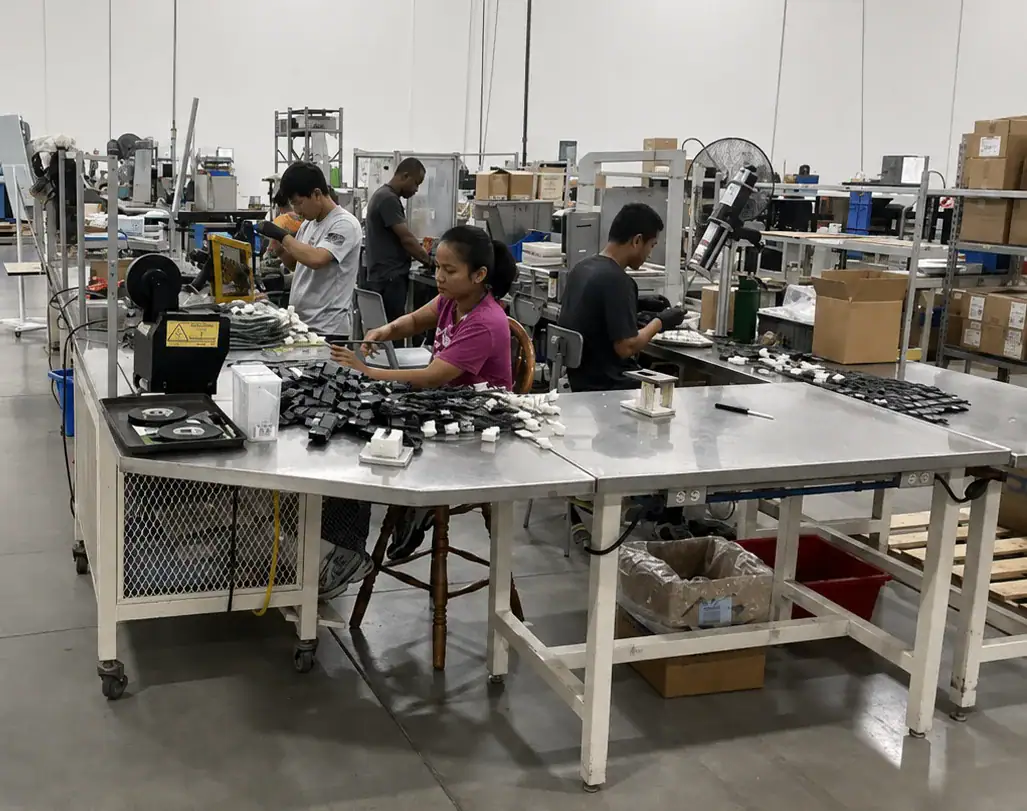
Washer lid switch line · RELY floor
When the current model no longer works
The work still matters. It just may not belong where it is today.
Production transfers happen for different reasons. An incumbent supplier exits. A mature product is consuming space needed for growth. Service parts no longer fit the main line. A supplier cannot support the required volume. Equipment exists, but the program needs a new operating home. The reason matters because it changes how the transfer should be planned.
Situation 01
Supplier exit or performance risk
Your current source is leaving the program, missing requirements or no longer supporting the work at the level the business needs.
Situation 02
Capacity & floor space
A recurring program is consuming labor, equipment or floor space needed for higher-priority production.
Situation 03
Legacy & service parts
The product still needs reliable supply, but its volume, age or complexity no longer fits efficiently inside the original operation.
Situation 04
Strategic outsourcing
The work can be defined and controlled, but it does not need to consume your internal manufacturing resources.
The question is not simply, “Can someone else build it?” The question is:
Can the manufacturing responsibility move without losing control of supply, quality and execution?
More than a machine move
A production program has more parts than the finished product.
The visible production equipment is only one piece of the transfer. The program around it may include years of supplier history, material commitments, workarounds, customer requirements and undocumented operating knowledge.
Product definition
Drawings, BOMs, revisions, specifications, deviations and approved product requirements.
Process knowledge
Work instructions, setup information, operator knowledge, process sequence and known failure modes.
Inventory
Finished goods, raw materials, WIP, obsolete stock, customer-owned material and inventory in transit.
Open purchase orders
Supplier commitments already placed before the manufacturing responsibility changes.
Suppliers
Approved sources, pricing, lead times, MOQs, customer-directed suppliers and multi-tier supply relationships.
Equipment & tooling
Production equipment, fixtures, gauges, test equipment, spare tooling, utilities and maintenance condition.
Quality & approval
Inspection, testing, traceability, PPAP, first article, customer notification and production-release requirements.
Customer supply
The inventory, timing, validation and fallback plan required to keep shipments moving while the process changes hands.
A transfer is not complete because the truck arrived. It is complete when the receiving operation can repeatedly execute the program under controlled requirements.
The commercial handoff
Who owns the inventory on cutover day?
Inventory ownership is one of the easiest transfer decisions to leave vague and one of the most expensive to untangle later. Before production responsibility changes, both teams need a defined plan for existing inventory, WIP, supplier commitments and future purchasing.
Model 01
Purchase existing inventory
RELY may purchase agreed usable inventory at an agreed valuation as part of the transfer.
Model 02
Consign until depleted
Customer-owned inventory transfers to RELY and is consumed before RELY transitions to future purchasing responsibility.
Model 03
Ongoing consignment
The customer continues to own agreed materials while RELY performs the manufacturing work.
Model 04
Hybrid
Different components follow different ownership models based on supply agreements, economics, lead times or customer requirements.
Each model is an arrangement reviewed for your program, not an option RELY accepts automatically. The structure is agreed in writing before cutover.
Open POs need a plan too.
For each supplier commitment, determine whether the PO will be:
- Completed by the customer and transferred as inventory
- Completed and consigned
- Assigned or transferred where commercially permitted
- Cancelled and reissued by RELY
- Split between the customer and RELY
- Allowed to run out before purchasing responsibility changes
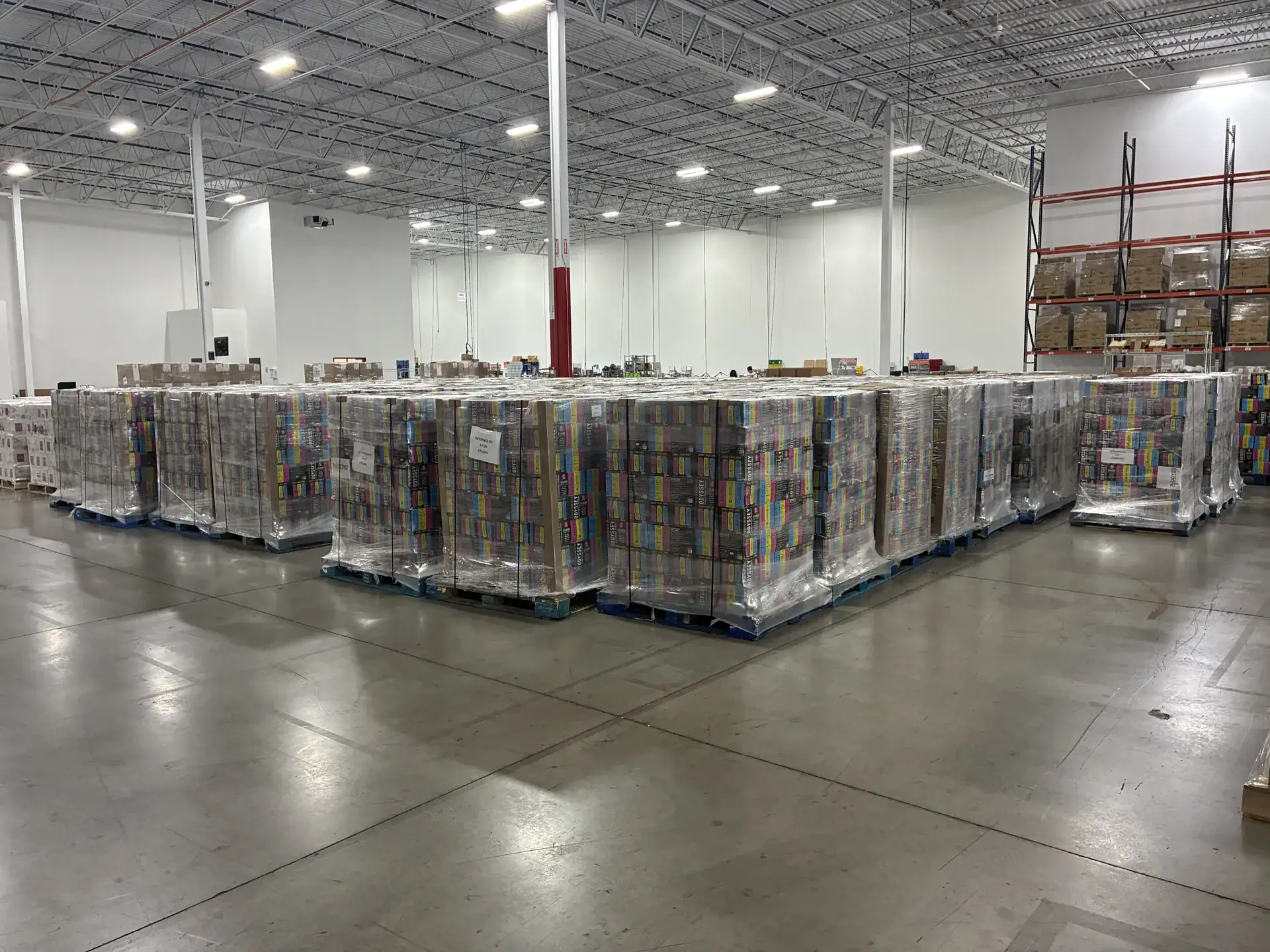
Settle this first
What is the inventory strategy at cutover?
Are we buying the existing inventory, consuming it on consignment, taking over open purchase orders, or transitioning through a combination of all three?
That answer affects working capital, supplier communication, excess inventory, launch timing and the future-state commercial model.
Talk through your inventory planEquipment & tooling
Yes, the equipment can move. First, understand what is moving with it.
RELY can evaluate customer-owned equipment, tooling, fixtures and test systems as part of a transferred manufacturing program.
Before the move, the transfer team should understand the condition of the assets, required utilities, maintenance history, spare tooling, calibration needs, safety requirements and the process knowledge needed to operate them.
Do not move a mystery.
A transfer should not turn an existing equipment or maintenance problem into an unexplained launch problem.
What to document
- Equipment ownership
- Tooling ownership
- Current operating condition
- Known maintenance issues
- Utilities
- Fixtures and gauges
- Test equipment
- Spare parts
- Calibration requirements
- Manuals and settings
- Rigging and transportation
- Reinstallation responsibility
What the receiving operation needs
- Safe installation
- Required utilities
- Process setup
- Controlled work instructions
- Operator training
- Quality checks
- Equipment acceptance
- Backup plan for known risks
Protect the customer first
Do not shut down the old process until the new supply path is ready.
The transfer schedule has to account for more than the equipment move. Existing inventory, open demand, customer approvals, material availability, pilot production and the receiving operation’s ramp all affect the safe cutover date.
Current production
The existing source keeps shipping.
Transfer bank / supply bridge
Inventory built to cover the move.
Pilot & validation
RELY proves the process.
Customer approval
Your release criteria are met.
Cutover
Responsibility changes hands.
Stable production
Recurring cadence at RELY.
Depending on the program, continuity planning may include
- Finished-goods prebuild
- Safety stock
- Parallel production
- Staged SKU transfers
- Pilot builds
- First article
- Run-at-rate or equivalent production validation
- Customer approval
- Defined fallback supply
How much supply do you need before you can safely stop the old process?
The answer depends on demand, material availability, transfer timing, approval requirements and the reliability of the receiving process.
Proven program transfer · Case Study No. 21
The tooling transferred in a truck. The manufacturing system had to be rebuilt.
When a major appliance OEM’s incumbent supplier exited three legacy UL product lines, RELY took over the tooling and rebuilt the manufacturing system underneath it.
The hard part was never running the equipment. It was proving that someone else’s tooling, suppliers and manufacturing history could be requalified through full PPAP under RELY’s name.
- 3
- Legacy product lines transferred from the incumbent supplier
- 10
- UL part numbers, requalified and PPAP approved
- 85
- Raw-material & component SKUs planned and stocked
- 20
- Of those SKUs require multi-supplier routing before reaching RELY
From RELY Case Study No. 21 · Legacy Program Transfer · Major appliance OEM
Anyone can inherit the equipment. Very few suppliers will inherit the responsibility.
What RELY actually owned
- 01Tooling requalification
- 02Supplier & BOM continuity
- 03Full PPAP, start to finish
- 04BOM complexity mapping
- 05Tooling resilience
- 06Weekly production cadence
What the first order can expose
The first order exposes what the transfer didn’t.
An incumbent’s exit looks like a clean handoff: dies, anvils, testers and BOMs, boxed up and shipped. What doesn’t fit in the truck is years of undocumented knowledge, with none of the people who built it. In Case Study No. 21, the first production order surfaced two problems the transfer documentation never mentioned.
Incident 01 · Obsolete resin
The specified resin was obsolete. The molding supplier had none left.
RELY went directly to the resin manufacturer, identified two replacements meeting the full UL specification and purchased the material to keep the program moving. Both materials became PPAP-approved primary and secondary options.
Incident 02 · Failed custom anvil
The inherited custom anvil failed on the first production order.
The order was already overdue. Spare tooling included anvils with broken tips and others built for different rivets. The spare-parts box told part of the program’s history the transfer documentation didn’t.
Plan for it
What the paperwork usually misses.
- Obsolete or single-source materials in the BOM
- Worn, undocumented or mismatched spare tooling
- Setup knowledge that left with the previous operators
- Demand already overdue when the transfer lands
- Supplier dependencies two or three tiers down
What ownership looked like: Friday 11 AM to Monday shipment.
Damaged tooling returns
Damaged tooling arrives back at RELY. Recovery begins.
Shortage flagged
The customer flags a shortage one week out. RELY gets an outside machine shop to reopen after hours.
Bridge fix
The bridge fix produces the first good parts.
Second fix
The bridge solution fails. The team immediately develops a second fix.
400 shipped
400 parts finished and shipped the same day. Three replacement anvils ordered as the permanent corrective action.
“Thank you for the extra effort from your team … working after hours to help us avoid a production impact.”
Who owns what
Clear ownership before anything moves.
A transfer goes wrong when two teams each assume the other owns a decision. The split below is typical. The actual split is agreed during scoping, and your team decides what it keeps.
Your team decides
Customer decisions
- Product definition and revisions
- Customer and end-customer approvals
- Commercial ownership of inventory and tooling
- Customer notification
- Final production release
Decided together
Transfer plan
- Inventory model and open PO plan
- Transfer bank size
- SKU sequence and pilot scope
- Validation criteria
- Cutover date and fallback supply
RELY can lead
Execution
- Transfer map and schedule
- Equipment receipt, setup and acceptance, as agreed
- Work instructions and operator training
- PPAP and first-article packages where required
- Supplier coordination once purchasing transfers
- Weekly production cadence and reporting
How to start
Send us one part and the print.
We’ll map what it would take to transfer, requalify and launch it, including inherited gaps, risks, supplier dependencies and the information we’d need to recover. You decide whether to commit after you see the map.
| When | What helps |
|---|---|
| To start | Product family, current volume, why the work needs to move, target timing, and one part with its print. |
| During scoping | BOMs, drawings and revisions; inventory and open PO lists; equipment and tooling list. |
| Before pilot | PPAP, first-article and customer approval requirements, plus validation criteria. |
| NDA | Need one before sharing drawings? Tell us and we start there. |
The work runs on services RELY already operates
Contract Assembly & SubassemblyFinal assembly, subassembly and electromechanical builds, including legacy and service programs.View service → Kitting & Kit AssemblyKits, packaging and fulfillment for service parts and aftermarket programs.View service → Part Sorting, Containment & ReworkInspection and containment when inherited inventory needs to be verified before it ships.View service → Wire Harness & Cable AssemblyBuild-to-print harness and cable programs, 100% continuity tested.View service →Questions buyers ask
Short answers. Full answers in the FAQ.
What is included in a production transfer to RELY?
A transfer covers the manufacturing responsibility, not only the equipment. Depending on the program, that includes product definition, BOMs and revisions, process knowledge, existing inventory and open purchase orders, suppliers, equipment and tooling, quality and approval requirements, and the plan that keeps customer supply moving through cutover.
Full answer: taking over a product lineCan customer-owned equipment and tooling move to RELY?
Yes. RELY can evaluate customer-owned equipment, tooling, fixtures and test systems as part of a transferred program. Before the move, both teams document ownership, operating condition, maintenance history, utilities, spare tooling, calibration needs and who is responsible for rigging, transport and reinstallation.
Full answer: equipment transfersWho owns existing inventory and open purchase orders at cutover?
That is defined per program and agreed in writing before production responsibility changes. Common models are RELY purchasing agreed usable inventory, consignment until depleted, ongoing consignment, or a hybrid by component. Each open PO gets its own plan: completed and transferred, consigned, assigned where commercially permitted, cancelled and reissued by RELY, split, or allowed to run out.
Full answer: materialsDoes RELY support PPAP and customer requalification?
Yes, where the program requires it. In Case Study No. 21, RELY requalified 10 UL part numbers through full PPAP under RELY’s name. Approval decisions stay with the customer and, where applicable, the end customer.
Full answer: PPAP and first articleHow long does a production transfer take?
It depends on the program. Approval requirements, material lead times, equipment condition and installation, the size of the transfer bank and the receiving process’s ramp all set the timeline. RELY builds the schedule with your team after reviewing those dependencies instead of quoting a generic lead time.
Full answer: transfer timingCan we transfer a few SKUs first and expand later?
Yes. Many transfers start with a defined subset of SKUs or a pilot build, then expand once the process, materials and quality checks are proven. Staged transfers also reduce the supply risk of moving everything at once.
Full answer: pilotsShould the current process keep running until RELY is validated?
Where possible, yes. Finished-goods prebuild, safety stock, parallel production, pilot builds and customer approval can bridge the gap until RELY’s process is validated. The safe cutover date depends on demand, material availability and approval requirements.
Full answer: protecting supplyWhat do we need to share to get started?
Start with the product family, current volume and why the work needs to move. One part and its print is enough for a first look. Drawings, BOMs, inventory lists and open PO detail can follow during scoping. Need an NDA first? Tell us and we start there.
Full answer: quote inputsHave a program that needs a new home?
Tell us the product family, current volume and why the work needs to move. We’ll map the transfer before you commit. A complete transfer package is not required to start.
Or call 262.276.0050 · info@relycm.com