Medical, Dental & Healthcare
Medical & diagnostic device assembly, kitting and launch support.
Bring the product requirements. RELY can help turn them into a build, a kit and a documented launch. RELY Contract Manufacturing supports medical, diagnostic, dental and healthcare product teams with assembly, component sourcing, kitting, packaging and inspection to approved requirements. Explore historical programs spanning a test-kit launch, mask production and diagnostic-device process development.
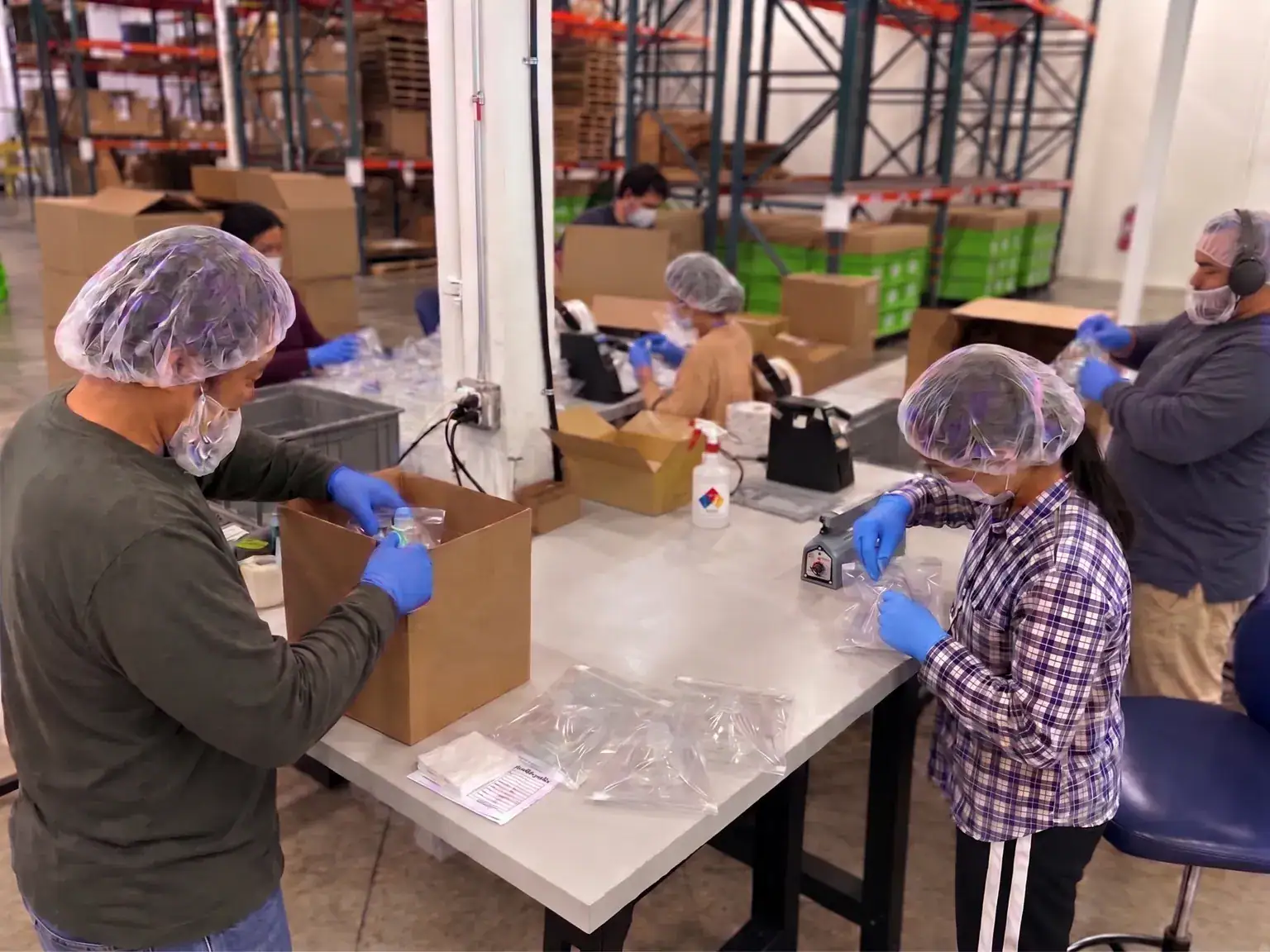
Mask program · assembly, cleaning and kitting
At a glance
From product requirements to a documented build.
RELY helps teams turn product knowledge into work another trained operator can follow: process observation, visual instructions, defined inspection points and an agreed pilot. The scope can include assembly, kitting, packaging, inspection and rework, with documentation and traceability matched to the program.
The examples below cover three different needs: launching a test kit, transferring a mask assembly program that operated under full Good Manufacturing Practice (GMP) policies and procedures, and documenting a diagnostic-device build.
- Serves
- Medical, diagnostic, dental and healthcare product companies and their suppliers
- Work
- Assembly, component sourcing, kitting and packaging, inspection and rework
- Quality system
- ISO 9001:2015, Amtivo certificate 263741, valid through March 19, 2027. Certificate (PDF)
- Release
- Stays with the customer unless a specific written agreement says otherwise
- Location
- 52,000 sq ft facility in Menomonee Falls, Wisconsin
Case Study No. 14 · COVID-19 Test Kit Launch · 2022
The test was ready for validation. The kit still had to be built.
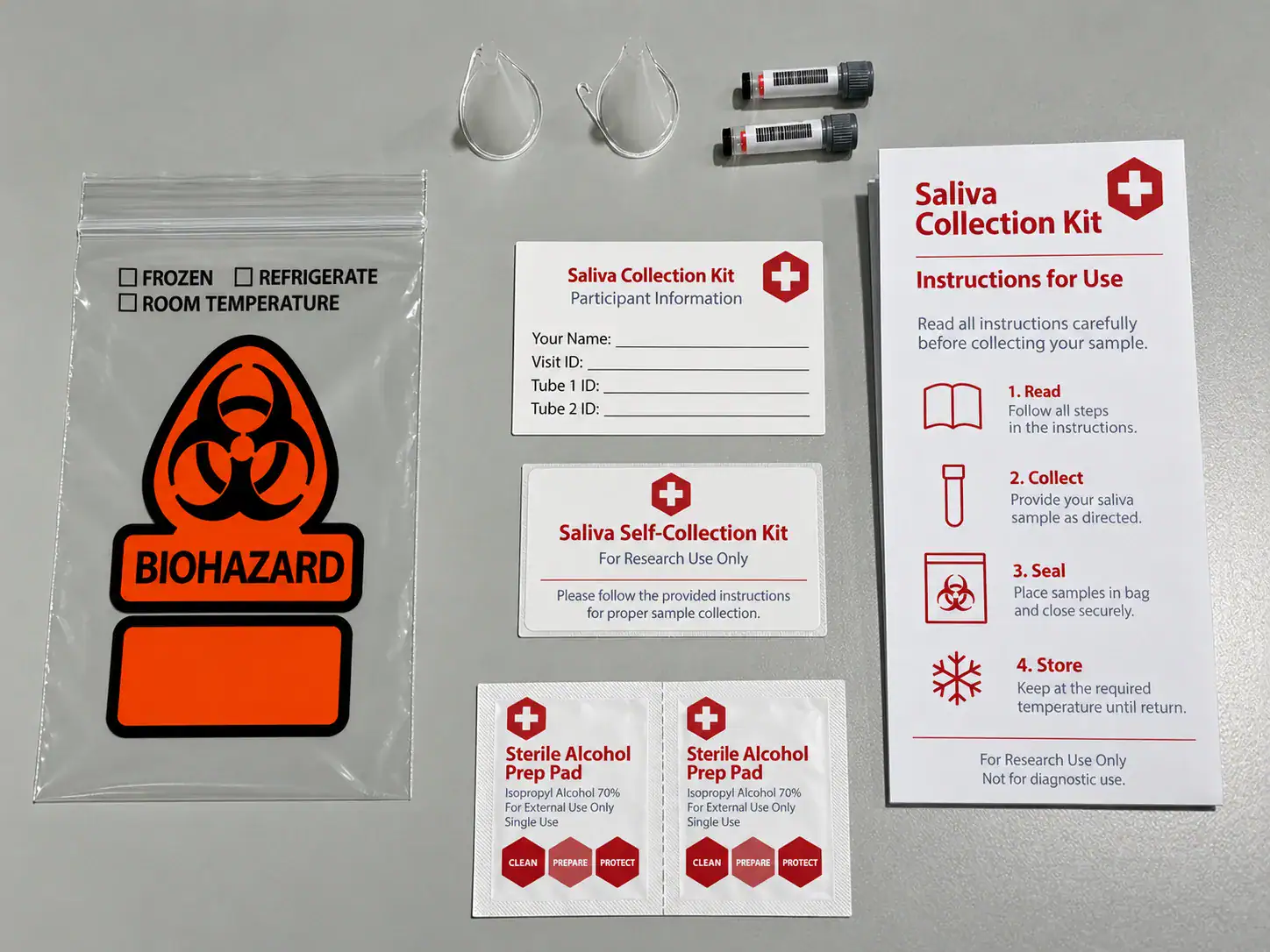
A molecular diagnostics company needed saliva self-collection kits for clinical validation of a COVID-19 test. The customer owned the science and two custom components. RELY helped define the kit materials and packaging, managed sourcing and printing, documented the build and assembled the pre-production lots for investigational use.
- 6,005
- Kits shipped: three documented 2,000-kit validation lots plus five PPAP samples
- 9 days
- From first article to the first 2,000-kit lot
- 9
- Inspection points in each kit’s assembly process
- What RELY owned
- Kit-material and packaging selection against the customer’s specification, sourcing or printing nine of eleven BOM lines, print coordination, visual work instructions, assembly, inspection and lot documentation.
- Build controls
- Nineteen documented assembly and inspection steps, ten physical pieces per kit with count verification, and checks covering print quality and component condition before sealing.
- Launch records
- The case reports full PPAP, including a supplier survey, quality agreement, first article and a completed build record for every lot. Each shipment carried a certificate of conformance with component lot numbers; sub-lots traced back to the parent lot.
- Delivery sequence
- The three 2,000-kit lots were dated April 28, June 2 and September 2, 2022. The nine-day result describes first article to the first lot, not all three lots.
Source: RELY Case Study No. 14, COVID-19 Test Kit Launch. Pre-production kits for investigational use in a 2022 program. These are historical program results, not standard lead times or evidence of regulatory clearance or clinical outcomes.
Why healthcare product teams call RELY
Controlled work that has outgrown the team doing it.
01 · Assembly capacity
The parts are ready. Assembly is at capacity.
Molding or component production can keep up, but assembly, cleaning, kitting or packout compete for the remaining people and floor space. See the mask assembly case
First moveObserve the current process, document the method and define the operation to transfer.
02 · Technical staff on the build
Technical staff are still tied up in repeatable assembly.
Experienced technical staff are assembling units while repeatable production work competes with development, engineering and other higher-value technical work.
First moveObserve the build, document the method and scope a pilot that another trained operator can follow.
03 · Kits and packaging
The build is only part of the work.
Accessory kits, labeling and packaging compete for the same people and space as the core operation.
First moveDefine the BOM, packaging requirements, identity checks and release records as part of the program.
04 · Inspection backlog
Product waits on inspectors, not criteria.
Incoming or in-process inspection has fallen behind, and material is waiting on people rather than on a decision.
First moveRun inspection to your written criteria with records you can audit.
05 · Supplier issue
Components failed incoming inspection.
Suspect components need to be sorted and documented without losing lot traceability.
First moveSort, segregate and report by lot, with disposition left to you.
06 · Legacy products
Older products still have to ship.
Replacement parts and mature products still need supply after engineering has moved on to the next design.
First moveKeep them building to the approved documentation.
Where RELY fits
Defined operations, documented end to end.
Assembly and subassembly to your documents.
Mechanical and electromechanical assemblies built to approved documentation, with visual instructions, checks at the station and revision control.
Explore contract assembly and subassembly → Kitting & packagingKits sourced, built and verified.
Kit materials and packaging reviewed against your specification, then built to the approved BOM with count, label and lot checks before release.
Explore kitting and contract packaging → Inspection, testing & reworkInspection and rework to your criteria.
Visual, dimensional, functional and electrical checks to your criteria, and rework only under an approved instruction.
Explore inspection, testing and rework → Value-added manufacturingLabeling and repackaging.
Approved label and packaging changes on existing inventory, with counts reconciled and records kept.
Explore value-added services →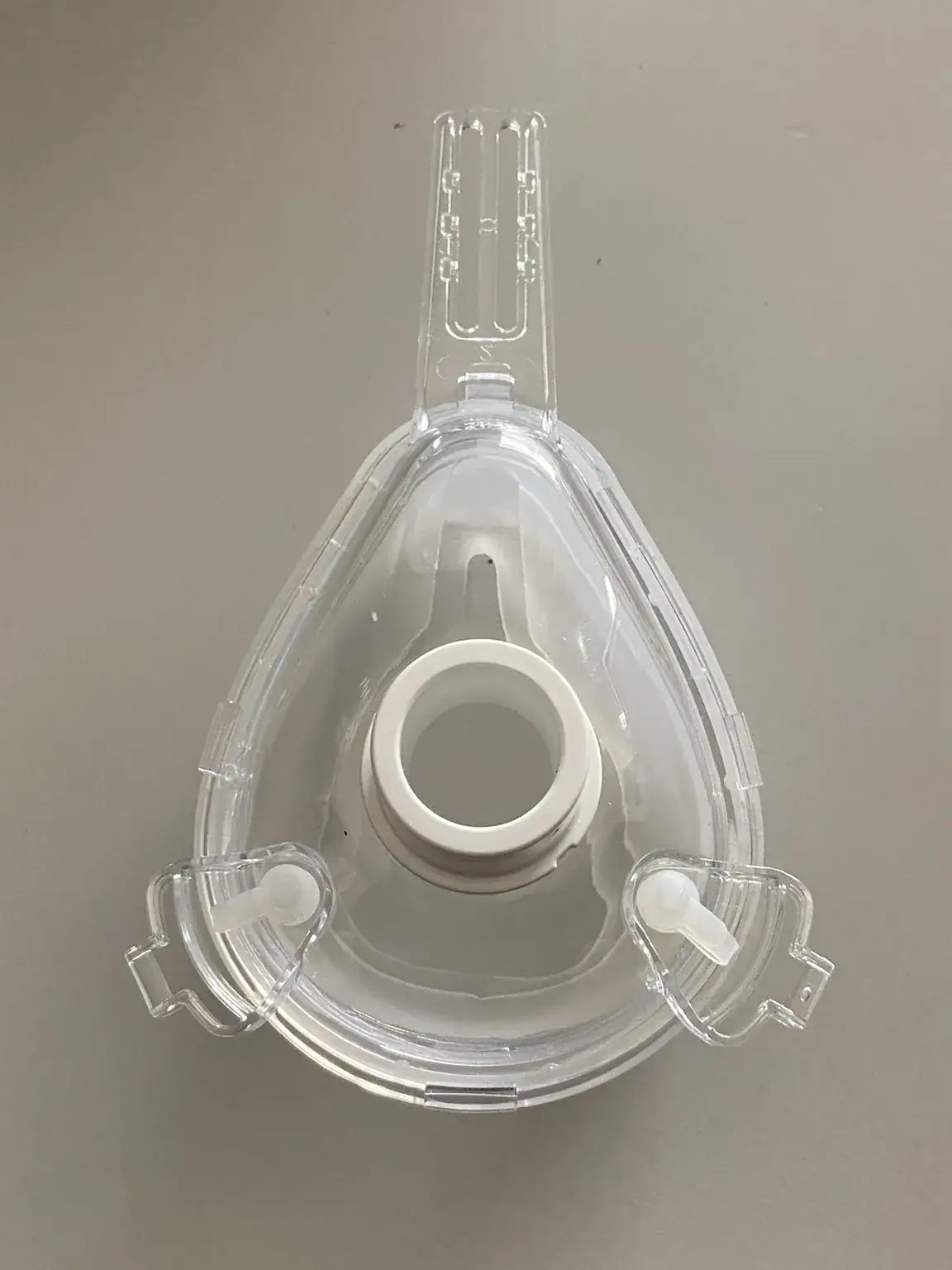
Case Study No. 13 · Medical Mask Assembly Program · 2021-2022
The molds could keep up. The assembly line couldn’t.
A Wisconsin injection molder that also produced medical parts faced a surge in mask demand during COVID. Its presses could keep up, but its assembly area was already full. Each mask required three molded parts to be assembled by hand.
RELY shadowed the customer’s assemblers and turned their method into step-by-step visual work instructions. The customer shipped molded components to RELY, where the team assembled, cleaned and kitted small, medium and large masks under full Good Manufacturing Practice (GMP) policies and procedures for that program. Each mask was bagged, and finished goods shipped back to the customer.
- Masks assembled
- 104,609 across the April 2021 to May 2022 program
- Sizes
- 3 sizes managed within one program: small, medium and large
- Peak output
- 17,000+ masks per month in both August and September 2021
- Production run
- Production ran for eight consecutive months during 2021; the overall program extended into May 2022
The work expanded beyond masks. By August 2022, RELY had built 210,689 parts across seven product families for the same customer: masks, portion trays, pivot pins, crowfoot holders and three smaller lines. The mask program led to six additional product lines.
Source: RELY Case Study No. 13, Medical Mask Assembly Program. Historical program results, 2021-2022. Volumes and GMP practices describe this specific program; new work is scoped to its own requirements.
Case Study No. 22 · Diagnostic Device Assembly Launch · 2022
The build lived in experienced hands. RELY helped put it into instructions.
A urine-based tuberculosis diagnostic device depended on delicate components, moisture-sensitive materials and a lab team’s hands-on knowledge. RELY observed the work, developed visual instructions with the customer and supported builds in the customer’s lab and later at RELY.
01
Observe the actual build.
RELY worked alongside the customer’s team and recorded stations with video and photographs.
02
Make the instructions visual.
Visual instructions captured tools, parts, PPE and correct-versus-incorrect examples, then were revised with the customer.
03
Put inspection inside the sequence.
Critical-to-quality inspection gates were placed at identified risk points inside the build sequence.
04
Document material handling.
Environmental and material-handling controls were documented for the moisture-sensitive materials used in this program.
05
Improve the workstations.
RELY advised on press assistance, magnified lighting, counting tools and supplies to support the process.
06
Match the product to its package.
Each serialized cartridge was matched to its bag before the final heat seal.
Source: RELY Case Study No. 22, Diagnostic Device Assembly Launch, 2022. These process details describe this specific program; controls for a new scope are defined against its own requirements.
From Quote to Scale
Crawl, walk, run. Prove the method before volume.
Crawl: walk the build
Review the build sheet, product requirements, current method, handling risks and inspection points.
Crawl: document the method
Define visual instructions, materials, tools, correct and incorrect examples, and customer-approved acceptance criteria.
Walk: evaluate a pilot
Agree what the pilot must demonstrate, record results and confirm process, training and checks.
Run: transfer the defined scope
Expand the approved operation with agreed volumes, material flow, reporting and change control.
Product approvals, acceptance criteria and release stay with the product owner. RELY performs the contracted operation, segregates nonconforming material for your disposition and does not change a process, material or revision without your approval.
Questions healthcare buyers ask
Short answers. Full answers in the FAQ.
Does RELY have medical-specific case studies?
Yes. Case Study No. 14 documents a 2022 saliva test-kit launch: 6,005 kits shipped in three 2,000-kit validation lots plus five PPAP samples. Case Study No. 13 documents a 2021-2022 medical mask assembly program with 104,609 masks assembled in three sizes under full GMP policies and procedures for that program. Case Study No. 22 documents process development for a diagnostic-device assembly launch. These examples cover different manufacturing needs.
See the test-kit launchCan RELY source components and assemble a medical or diagnostic kit?
Yes, subject to the program’s requirements. In Case Study No. 14, RELY sourced or printed nine of eleven BOM lines, documented the build, assembled and inspected the kits, and supplied shipment records with component lot numbers. A new kit starts with the approved BOM, material and packaging requirements, acceptance criteria and release responsibilities. Cleanroom, sterility and other special requirements must be reviewed during scoping.
Full answer: verifying kit contentsHas RELY assembled, cleaned and kitted products under GMP policies?
Yes, in one historical program. In Case Study No. 13, RELY assembled, cleaned and kitted masks in small, medium and large sizes under full Good Manufacturing Practice policies and procedures for that 2021-2022 program. The work included visual instructions, individual bagging and shipment of finished goods back to the customer. For new work, the required procedures, cleaning requirements, documentation and release responsibilities are agreed during scoping.
See the mask assembly caseCan RELY help document a build that currently depends on our scientists or engineers?
Yes. In Case Study No. 22, RELY observed and recorded the customer’s lab process, developed visual work instructions and revised them with the customer before supporting the build. A new program starts by reviewing the actual operation, acceptance criteria and documentation requirements, then agreeing the scope and pilot.
See the diagnostic build caseWhat traceability can RELY provide?
Traceability is defined for the program. In Case Study No. 14, each shipment carried a certificate of conformance with component lot numbers, and sub-lots traced to their parent lot. Case Study No. 22 included matching each serialized cartridge to its bag before the final seal. Your required records and identification levels are agreed during scoping.
Full answer: lot traceabilityIs RELY ISO 13485 certified?
RELY’s quality management system is certified to ISO 9001:2015 for contract manufacturing and assembly. RELY does not claim ISO 13485 certification. If your program requires an ISO 13485 certified supplier for the work, say so at the start so both teams can confirm fit before investing time.
Full answer: RELY’s certificationWho releases the finished product?
You do. RELY performs the defined operation to your requirements and records the results. Product design, acceptance criteria and release authority stay with the customer unless a specific written agreement says otherwise.
Full answer: handling nonconformanceCan we start with a pilot?
Yes. A pilot can confirm the method, cycle time, checks, documentation, material flow, testing and training requirements. Both teams agree beforehand on what the pilot must demonstrate and who approves the results.
Full answer: starting with a pilotBring us the kit or assembly work your team needs to move forward.
Start with your parts list or build sheet, target volumes and timing. RELY can review material and packaging choices, define the assembly, cleaning and kitting scope, and map the records your quality team needs. Arrange a sample review and pilot before committing to volume.
- Parts list or build sheet
- Target volumes
- Timing
- Packaging requirements
- Records you need
General: 262.276.0050 · info@relycm.com