Electronics, Appliances & Technology
Appliance assembly, kitting and line transfers.
High-volume appliance accessory kits, mechanical and electromechanical subassemblies, and production lines that need a new home. RELY Contract Manufacturing supports appliance, electronics and technology manufacturers with kitting, assembly, line transfers and service-part programs built around approved requirements and release schedules.
Product already built and on hold? RELY also sorts, tests and reworks: 262.853.1634.
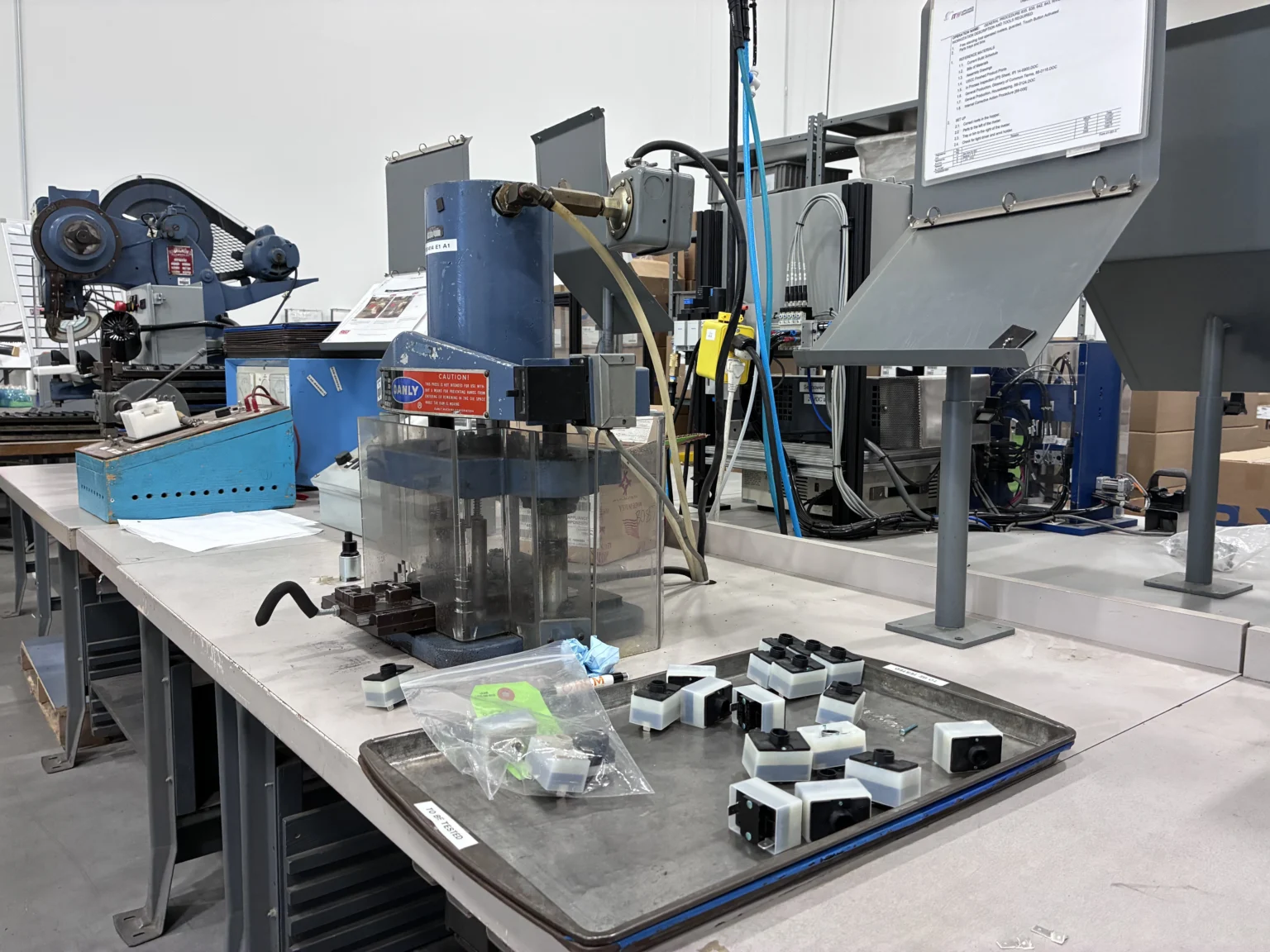
Equipment-based assembly · RELY floor
At a glance
What RELY does for appliance and electronics OEMs.
Bring RELY a kit BOM, a subassembly, a customer-owned line or a service-parts family. Define the revisions, expected volumes, material responsibilities and release schedule, then establish the process before more work moves.
- Serves
- Appliance OEMs, electronics and technology manufacturers, and their component suppliers
- Equipment
- Customer-owned equipment, tooling and test systems reviewed and moved under a documented plan
- Transfer proof
- 10 UL part numbers requalified and PPAP approved under RELY (Case No. 21)
- Credentials
- ISO 9001:2015 certified. 52,000 sq ft in Menomonee Falls, Wisconsin
Appliance accessory kitting
High-volume accessory kits need a production plan.
An accessory kit may be a small part of the appliance. At production volume, it becomes a program of its own: components to receive, quantities to verify, model variations to control, packaging to replenish and releases to ship. RELY can take on that work as a defined kitting and packaging program.
01 · Define
Define each kit.
Build the kit definition around the approved BOM, quantities, model variations, instructions, labels and packaging. Keep revisions controlled so a component change does not become a mixed-kit problem.
02 · Plan
Plan the flow.
Agree component sourcing or customer-supplied material, inventory ownership, replenishment, expected demand and release schedules. Scope labor, workstations and storage against the actual program.
03 · Verify
Verify the packout.
Use documented work instructions and agreed quantity, component and label checks before the kit moves to its next destination. Define shortage handling and escalation before volume begins.
Bring the annual volume, expected peak releases and kit BOM. RELY will evaluate the process and capacity required.
Proof · Appliance OEM · Assembly and line transfer
One switch line moved to RELY. Two more followed.
- Starting problem
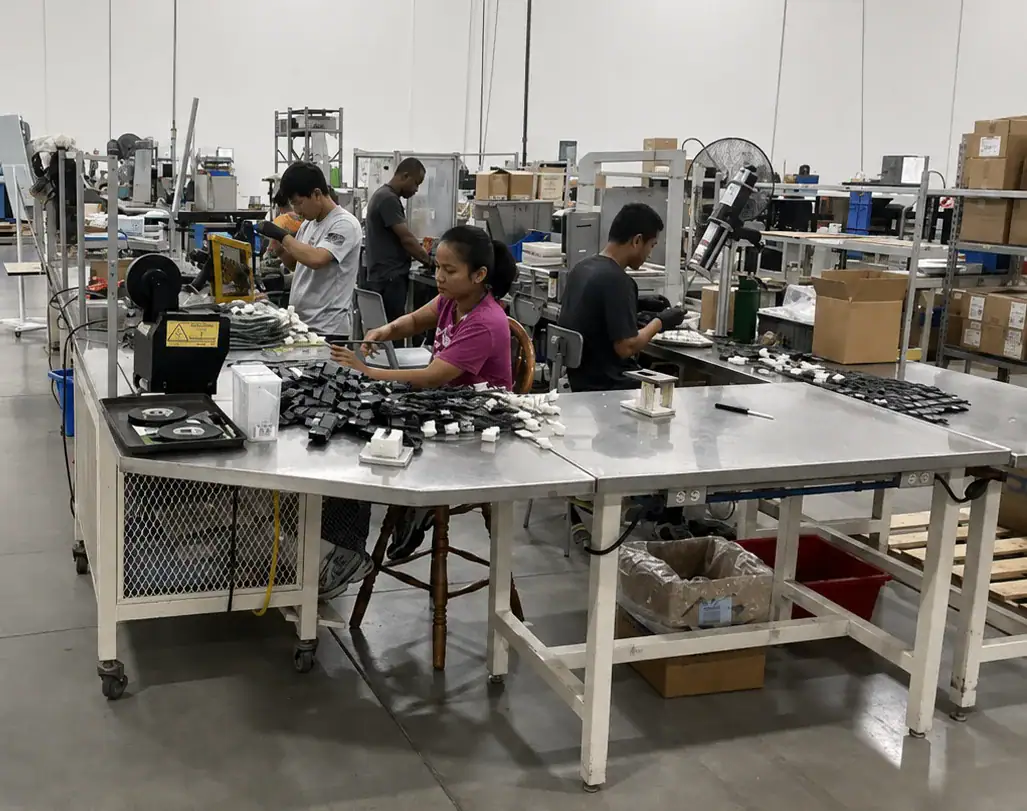
- A washing machine hidden-lid switch assembly line had become difficult to staff, and inconsistent demand was building backlog at an appliance OEM.
- What RELY owned
- Operating the semi-automated line, first inside the customer’s facility and then in RELY’s.
- What RELY did
- Wrote the work instructions, quality inspection instructions and preventive maintenance instructions for the line, then moved the equipment into RELY’s facility.
- Result
- The customer installed three new injection molding presses in the freed space. Two years later, two more switch assembly lines moved to RELY, covering washing lid switches, hidden lid switches and snap rotary switches.
- Why it matters
- The OEM traded a line it struggled to staff for new molding capacity, without losing supply of a part its products still need.
- 3
- Switch assembly lines moved to RELY
- 3
- New molding presses installed in the freed space
Program example as published by RELY. Figures apply to this program only.
Production transfers across the product lifecycle
Move the mature line. Keep the new one moving.
Appliance and electronics portfolios run several generations at once. The newest gets the engineering attention. The older ones still need supply, often on a line that is hard to staff or from a supplier that is leaving. RELY takes the older work as a defined program.
Your line today
Mature product, prime floor space
- Semi-automated or manual assembly
- Customer-owned equipment and tooling
- Service and legacy demand
- Shifts that are hard to fill
What RELY takes on
The line, the documents, the output
- Equipment move and requalification
- Work, inspection and maintenance instructions
- Supplier and BOM continuity
- A weekly production cadence
What you get back
Space and people for the next generation
- Floor space for new equipment
- Engineers off the legacy line
- Service supply that keeps shipping
- One accountable operation
In the appliance switch program above, the OEM used the space it freed to install three new injection molding presses.
Proof · Case No. 21 · Major appliance OEM
Three legacy product lines. Ten UL part numbers requalified.
When an incumbent supplier exited, the hard part was never running the equipment. It was rebuilding the supply chain and the approvals behind it.
- 01 · The exit
Supplier leaves three lines
The incumbent exited three UL legacy product lines. Tooling and BOMs could move. The process history had to be rebuilt.
- 02 · The rebuild
BOM mapped, PPAP run
RELY mapped the BOM, including 20 SKUs that route through more than one supplier, and ran full PPAP start to finish.
- 03 · First order
Two problems surface
The specified resin was obsolete with none left at the molder, and an inherited custom anvil failed.
- 04 · Recovery
Parts shipped Monday
Two replacement resins met the full UL specification and were PPAP approved. An outside shop worked after hours; 400 finished parts shipped the following Monday.
- 3 legacy product lines transferred
- 10 UL part numbers requalified and PPAP approved
- 85 raw-material and component SKUs planned and stocked
Source: RELY Case Study No. 21. Figures describe this program only. Customer approval authority stayed with the customer.
Service and legacy parts
Keep supporting the installed base.
Service demand continues after current production moves on. RELY can combine assembly, repair or retrofit kits, packaging, inventory and fulfillment into a defined service-parts program. Start with one product family or SKU group and establish the process before transferring more.
- 01Legacy switch, control and electromechanical assemblies
- 02Repair, replacement and retrofit kits
- 03SKU-specific packaging and labeling
- 04Inspection, test and rework of service stock
- 05Component and finished service inventory
- 06Pick, pack and ship to OEM, distributor or dealer
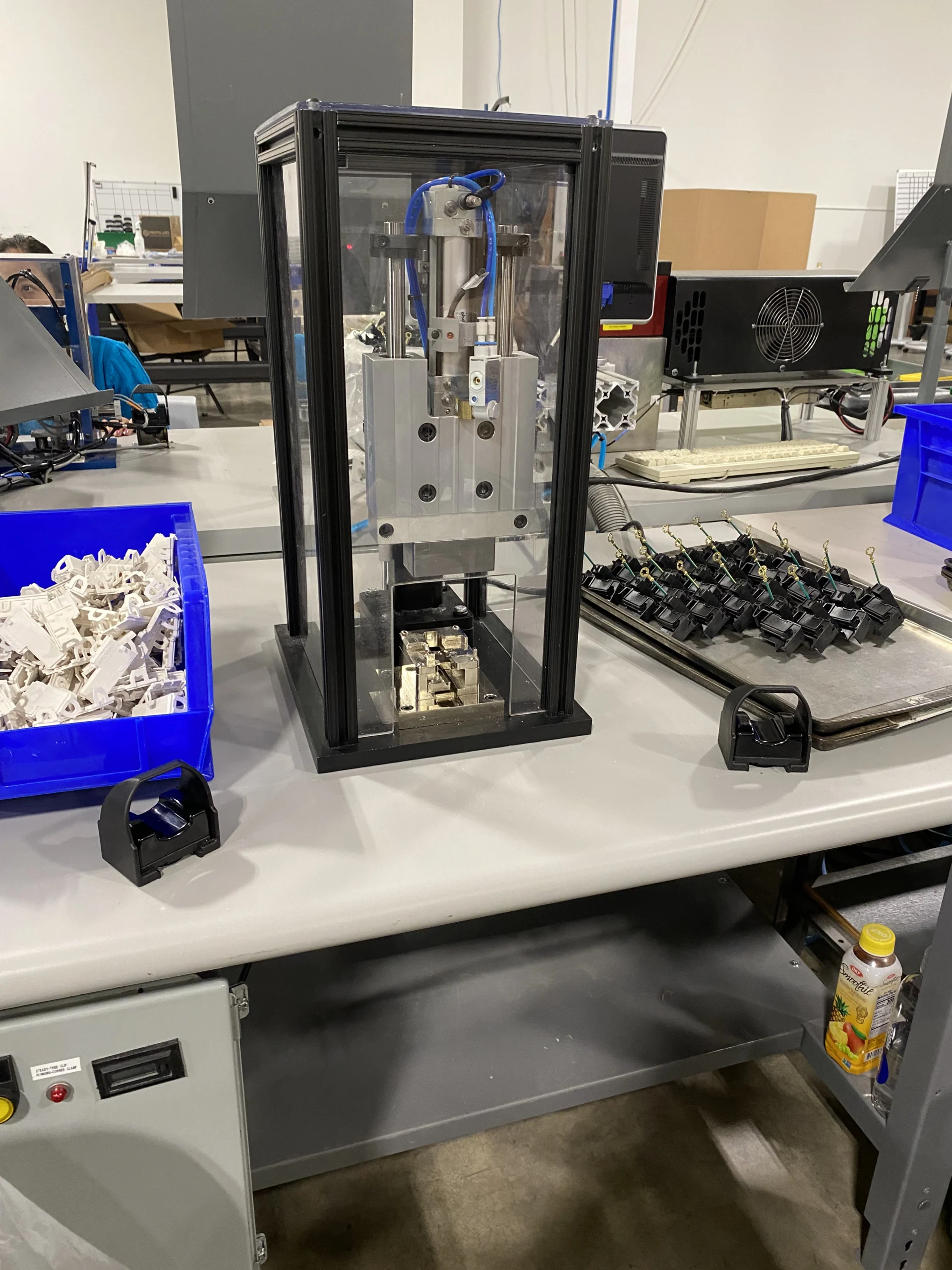
Service-part demand can be irregular. Plan the SKU mix, inventory and releases separately from production accessory kits, using the actual volumes for each program.
Where RELY fits
Four ways the work leaves your line.
Switches, controls and electromechanical builds.
Mechanical and electromechanical subassemblies, control boxes and line-ready components built to the approved revision, with checks at the station.
Explore contract assembly and subassembly → Kitting & contract packagingProduction accessory kits and service kits.
Accessory kits built to the approved BOM and release schedule, plus repair and retrofit kits packed for service channels.
Explore kitting and contract packaging → Production transfersLines, equipment and legacy product families.
Supplier exits, equipment moves and mature lines, with BOMs, tooling, suppliers and approvals mapped before cutover.
See how production transfers work → Inspection, testing & reworkSuspect components and held product.
Visual, dimensional, electrical and functional inspection and rework to your criteria, at your plant or at RELY.
Explore inspection, testing and rework →How the work is controlled
Controls you can review without running the line.
- 01
Documentation written for the line
Work, quality inspection and preventive maintenance instructions written for the actual equipment and product.
- 02
PPAP and first article
Full PPAP, first-article and customer launch documentation, at the approval level your program requires.
- 03
Qualified substitutions only
Material or supplier substitutions qualified to the specification and approved before use, as in Case No. 21.
- 04
Revision control
Instructions, kit definitions and builds tied to the approved revision, with an agreed path for engineering and component changes.
- 05
Test at the station
Electrical and functional checks built into the sequence where the product requires them.
- 06
Equipment care
Preventive maintenance, spare tooling and responsibility for customer equipment documented in the program.
Scope and responsibility
RELY runs the line or the kit program. You own the product.
Running the work and shipping the output.
- Line operation, supervision and operator training
- Work, inspection and maintenance instructions
- Material planning and supplier coordination in scope
- Care of customer equipment as documented
- Kit verification, packout, release cadence and reporting
Design, approvals and title to your equipment.
- Product design and specifications
- PPAP approval and customer notifications
- Engineering changes and deviations
- Ownership of customer equipment and tooling
- Return or disposition of equipment at program end
RELY does not perform SMT or printed circuit board assembly, and does not design products. Listing and certification requirements are reviewed for each part at the RFQ stage, so nothing outside the approved scope is implied.
Questions appliance and electronics buyers ask
Short answers. Full answers in the FAQ.
Can RELY quote high-volume appliance accessory kits?
Yes. Share the kit BOM, quantities per kit, model variations, packaging and labeling requirements, annual volume and release schedule. RELY scopes material flow, staffing, checks and packout around the program. Capacity and timing are confirmed during quoting against the actual requirements.
Kitting and contract packagingCan RELY run our equipment inside our plant before moving it?
Yes, where the program fits. In the appliance switch program, RELY first operated the semi-automated line inside the customer’s facility, wrote its work, inspection and maintenance instructions, then moved the equipment to RELY. Equipment condition, utilities, safety and maintenance are reviewed before anything moves.
Full answer: moving customer-owned equipmentCan RELY manage service parts after we move to a new product generation?
Yes. Service parts, aftermarket programs and legacy production are strong fits when the product still matters to your customers but no longer belongs on your main line. Scope can include manufacturing, assembly, procurement, kits, packaging and fulfillment.
Full answer: service parts and legacy productsWhat if our customer or a listing requirement means the move must be approved?
Then the approval becomes part of the transfer plan. Share the applicable manual, notification requirements and approval package early. RELY supports the documentation and validation work, and formal approval stays with the responsible party. In Case No. 21, RELY requalified 10 UL part numbers and completed PPAP approval.
Full answer: approving a location changeDoes RELY do SMT or PCB assembly?
No. RELY does not perform SMT or printed circuit board assembly. RELY builds mechanical, electromechanical and electrical assemblies, including control boxes, enclosures, cable assemblies and wire harnesses, using purchased or customer-supplied components.
Full answer: electromechanical assemblyHow long does a line transfer take?
It depends on the dependencies. A documented assembly with available materials and no new equipment moves much faster than a line that needs equipment relocation, utility changes, requalification and customer approval. RELY sets the timeline after reviewing the actual program.
Full answer: transfer timingCan we start with one line or one product family?
Yes. A pilot or a single line can confirm the method, cycle time, checks, documentation and material flow before more work moves. In the appliance switch program, one line moved first and two more followed two years later.
Full answer: starting with a pilotHave a kit program, a subassembly or a line to move?
Tell us what the kit or line includes, the volumes and release schedule, and what equipment is involved. You do not need a complete RFQ or transfer package to start.
- Kit BOM or product family
- Annual volume
- Peak releases
- Equipment involved
- Target timing
General: 262.276.0050 · info@relycm.com · Parts on hold: 262.853.1634