Plastics & Injection Molding
Plastic part inspection, assembly and kitting.
Keep your molding operation focused on production. RELY Contract Manufacturing takes on the inspection, sorting, rework, assembly and kitting that compete for your people and floor space. We also support transfers of defined assembly programs involving molded components, suppliers and customer-owned equipment.
Our team brings injection molding experience across leadership, engineering and operations, including hands-on process technician, maintenance technician and quality control experience.
200M+plastic parts sorted in the past three years.
Parts on hold? Call 262.853.1634. RELY responds to urgent sortation and containment inquiries within one business hour. Deployment timing is confirmed after reviewing the work.
Molded parts at inspection · Case Study No. 15
At a glance
Defined work around molded parts. One accountable operation.
Move one operation, one part family or a recurring program to RELY. The work can run at your plant or at RELY’s 52,000 sq ft facility in Menomonee Falls, Wisconsin, with scope, checks and reporting agreed before launch.
- Serves
- Injection molders, molded-component suppliers and OEMs using plastic parts
- Core work
- Part sorting, inspection, containment, rework, assembly and kitting
- Program support
- Component procurement, material control, assembly-program transfers and supplier coordination within the agreed scope
- Technical background
- Injection molding leadership, engineering, operations, process technician, maintenance technician and QC experience
- Reporting
- Failure-mode results, lot traceability and photographic evidence matched to the program
- Quality system
- ISO 9001:2015 certified
- Location
- Menomonee Falls, Wisconsin; on-site sorting support in Wisconsin and the Midwest
Assembly and packaging path
The presses can run. Assembly and packout are where the people and floor space go.
When molded components are ready but assembly, kitting, bagging or packout is consuming your people and floor space, RELY can take that defined operation into its 52,000 sq ft facility or run it inside yours, with supervision, instructions and checks owned by RELY.
- <4 wks
- Go-ahead to production at RELY after an out-of-state assembly move (Case No. 13)
- 132,115
- Kits packed inside a molder’s facility, January 13 to June 10, 2026
- 7
- Product lines one molder moved to RELY after its first assembly program
- At RELY
- A Wisconsin injection molder moved mask assembly from out of state to RELY, closer to its molding operation. RELY time-studied the work before the move, had production running in under four weeks and assembled 104,609 masks from 307,347 molded components. The customer then moved six more product lines to RELY.
- Inside your plant
- Inside another Wisconsin injection molder, RELY ran two-shift kitting of four-bowl, four-lid food-storage sets with a RELY lead on each shift. A 1,120-kit labeled validation run passed audit before full-rate restart, and the delivery timeline held.
Sources: RELY Case Study No. 13 (masks April 2021 to May 2022; seven product lines through August 2022) and RELY on-site kitting program records (January 13 to June 10, 2026). Results describe these programs only and are not capacity commitments.
Molding experience behind the inspection
The finding should help your team decide what to check next.
A reject count tells you how much material failed. Your process and quality teams also need to know what failed, where it occurred and whether the pattern is changing.
RELY’s molding background helps the team recognize and communicate those patterns. Where cavity identification is available, an observation such as “flash appearing on cavity 15” gives your process team a specific condition and location to investigate while the tool is still running.
That support can include photographs, affected lots, observed failure locations and suggested process or tooling checks for your team to evaluate. Your authorized process and engineering teams approve and implement any changes.
01 · Cavity
Cavity-specific observations
Identify the affected cavity when it is traceable from the part, document the condition and report the pattern to the customer’s team.
02 · Photographs
Photographs tied to the work
Record observed failure modes by lot so the customer can review actual examples alongside the inspection results.
03 · Detection
Evidence for better detection
In the high-volume program below, RELY sends photographs of every unique failure mode found within each lot. The customer can use those examples to train its vision inspection systems to recognize issues.
Case Study No. 16 · High-Volume Containment
172 million parts. One customer. Inspection backed by evidence.
- 172M+
- Parts inspected and sorted over a three-year period
- 4.31M
- Parts sorted in the peak week, October 2024
- 4.1M
- Defective parts caught among 76M parts with recorded defect data
- 13
- Part numbers that have come off required sortation
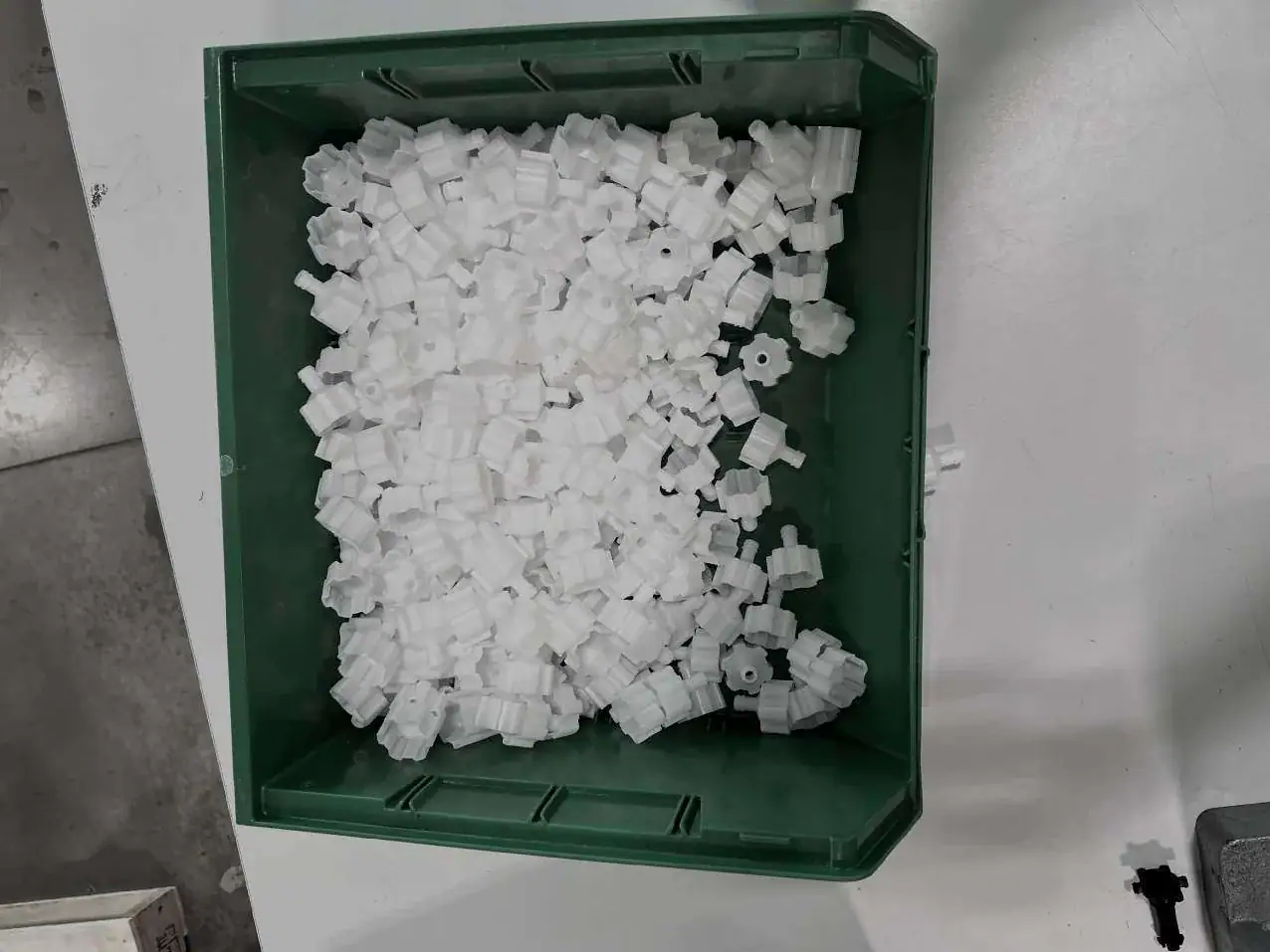
Over a three-year period, RELY sorted more than 172 million parts for one customer. Parts arrive without the customer identifying a suspected defect or pointing to where a failure is located. Each part has approximately six to eight potential failure locations requiring inspection.
Inspection runs to approved acceptance criteria, with uncertain conditions escalated for customer review.
RELY identifies and records observed failure modes, maintains lot-level traceability and analyzes the inspection results. For every unique failure mode found within each lot, RELY captures photographs and sends them to the customer. These images give the customer actual defect examples it can use to train its vision inspection systems to recognize issues.
Together, the inspection results, photographs and lot history give the customer evidence to evaluate recurring issues and determine when particular parts can come off required sortation.
Thirteen part numbers came off required sortation.
Between June 2024 and February 2026, RELY sorted 71.3 million parts across 13 part numbers that have since come off required sortation. That represents approximately 41% of the 172.1 million parts RELY inspected for this customer through July 30, 2026.
The work draws on injection molding experience across RELY’s leadership, engineering and operations teams, including hands-on process technician, maintenance technician and quality control experience.
The customer receives inspected material, photographic defect evidence and a documented history of what RELY found, where it occurred and which lots were affected.
Source: RELY Case Study No. 16 and program records. The 172.1M total covers October 2023 through July 30, 2026. The peak week began October 20, 2024. The 4.1M defect count applies to the 76M parts with recorded defect data. Results describe this program; scope, output and exit requirements are agreed for each new program.
Why plastics teams call RELY
The press can keep running. The supporting work needs an owner.
01 · Held inventory
The hold area is filling faster than your team can clear it.
Suspect lots need inspection, rework and documented disposition. RELY can take on the defined queue, reconcile quantities and maintain lot identification as the work moves.
02 · Inspection capacity
Your best production people keep getting pulled into sorting.
A quality issue competes with process control, maintenance and production for experienced people. Give the inspection operation its own trained team, supervision and reporting.
03 · Recurring defects
The same issue keeps returning without enough useful evidence.
Your team needs failure locations, cavity information where available, photographs and results by lot. Agree the reporting that will help your engineers investigate the pattern.
04 · Assembly bottlenecks
Molded components are ready. Finished assemblies are behind.
Joining components, checking fit, cleaning, kitting or bagging may be the constraint. Transfer a defined operation with visual work instructions and checks at the station. See the assembly path
05 · Kits and configurations
Every model adds another combination to control.
Molded components, purchased hardware, instructions and packaging have to stay aligned. Build each kit to an approved BOM, revision and pack definition.
06 · Supplier or program transfer
The product still needs to ship after the supplier changes.
An assembly program may depend on customer tooling, molded components, material specifications and several suppliers. Map those dependencies and the required approvals before cutover.
Where RELY fits
Inspect it. Recover it. Assemble it. Kit it.
Contract assembly and subassembly
Build molded components into mechanical or electromechanical subassemblies and finished products. Define the assembly sequence, fixtures, operator training and inspection points around the actual part.
Explore contract assembly →Sorting, inspection and rework
Visual, dimensional, functional and assembly-fit checks to approved requirements. Scope can include trimming, cleaning, rework and reclamation, followed by verification and documented disposition.
Explore sorting, containment and rework →Kitting and packaging
Combine molded parts with purchased components, hardware, instructions and packaging. Verify quantities, component identity, labels and packout against the approved kit definition.
Explore kitting and packaging →Assembly-program transfers
Transfer defined programs with the equipment, BOMs, component sources, material responsibilities and qualification requirements addressed. Start with one line or product family where that makes sense.
Plan a production transfer →Case Study No. 15 · Embedded Onsite Quality Team
Clear the hold area. Keep production people on production.
A highly automated molding operation had held material accumulating faster than its team could clear it without pulling qualified people away from production. RELY took ownership of the defined sorting, rework and material-control work.
5.2M+
Pieces of held material dispositioned
91.1%
Of those pieces returned to usable inventory
- 148
- MRB events handled in seven months
- 24 hours
- Median MRB closure time in this program
RELY sorted, inspected, trimmed, cleaned and reworked material against defined criteria. The team handled weighing, box verification, relabeling, repackaging and lot segregation, with quantities, failure modes and disposition entered directly against the work order as the work ran.
When on-site capacity was not enough, work moved to RELY. One 324,000-piece cavity sort moved through in a week. When the on-site lead turned over, a RELY supervisor stepped in and provided a week of overlap at RELY’s cost.
The customer had a team responsible for the hold queue, its records and continuity of the work.
Source: RELY Case Study No. 15. The recovery percentage applies to held material dispositioned in this program. MRB closure is the reported measure; it is not a standard turnaround promise for new work.
Case Study No. 21 · Legacy Program Transfer
The assembly moved. The material and supplier problems came with it.
When an incumbent supplier exited three legacy appliance product lines, RELY took over the assembly tooling and rebuilt the supporting manufacturing process, supplier coordination and qualification work.
- 3
Legacy product lines transferred
- 10
UL part numbers requalified and PPAP approved
- 85
Raw-material and component SKUs planned and stocked
- First order
- The first production order exposed an obsolete specified resin with no stock remaining at the molding supplier. RELY worked directly with the resin manufacturer to identify the replacement, purchased the material and coordinated the required clearance of the newly molded components before production.
- Program scope
- The program also required BOM mapping, multi-supplier routing, tooling recovery and a weekly production cadence. When an inherited custom anvil failed, RELY coordinated an outside machine shop and developed recovery solutions that enabled 400 finished parts to ship the following Monday.
- For plastics buyers
- For a plastics buyer, the relevant experience extends from the molded component through material availability, supplier dependencies, qualification and the finished assembly.
Source: RELY Case Study No. 21. This was an appliance assembly transfer involving molded components. Figures and qualification details describe that program.
Plastics customer story · Recovery at RELY to on-site kitting
A three-day recovery job opened the door to a retail-launch kitting program.
A Wisconsin injection molder first needed usable backplates recovered from assemblies held for a quality issue, without consuming its own production floor. RELY did that recovery job at its own facility. It built the trust behind a larger program: kitting and packaging food-storage sets inside the molder’s facility for a consumer brand’s national retail launch.
01 · Recovery job
5,498
Assemblies processed in the initial recovery job, completed in three production days.
02 · On-site kitting
132,115
Kits assembled inside the customer’s facility, January 13 to June 10, 2026.
02 · On-site kitting
7,040
Kits on the highest recorded day, across two shifts.
02 · On-site kitting
31,518
Kits in the highest recorded week.
-
01 · Recover the material
Recover the material and return it ready to handle.
RELY built its quote from a time study and video of the customer’s teardown process. The quote was approved within about a day, and the customer shipped the assemblies to RELY two days after approval.
RELY completed all 5,498 units in three production days. Reclaimed material returned bulk-packed and palletized in the customer’s reusable packaging.
-
02 · Run the kitting inside the plant
Support a national retail launch.
RELY ran the kitting operation inside the customer’s facility, with a RELY lead on each shift, and added a second shift when the window compressed. The program ran from January 13 to June 10, 2026.
When a labeling requirement was added mid-run, RELY walked placement and labor first, then built the label into the running line. A 1,120-kit labeled validation run passed audit before full-rate restart.
In all, RELY assembled 132,115 kits containing 1,056,920 bowls and lids over 35 recorded production days, and the delivery timeline held.
RELY also identified where equipment, materials and pallet handling slowed output and recommended fixes. The relationship opened discussions about additional incoming inspection and rework.
Start with one defined operation. Build the working relationship through execution.
Source: RELY program records and customer history. Recovery job: 5,498 assemblies processed at RELY in three production days. Kitting program: January 13 to June 10, 2026, inside the customer’s facility, 35 recorded production days including validation runs (recorded days, not consecutive calendar days). Peak outputs describe these specific jobs and are not capacity commitments.
From Quote to Scale
Crawl, walk, run. Prove the work before expanding it.
Crawl · Define the operation.
Review the part, current process, acceptance criteria, failure locations, volumes and timing. Agree material identification, reporting, release authority and what a pilot must demonstrate.
Walk · Establish the method.
Develop visual work instructions, train operators and run an agreed initial lot or pilot. Review inspection consistency, cycle time, handling, records and escalation before expanding the scope.
Run · Manage the program.
Schedule releases, control revisions and report results on the agreed cadence. For containment, track the evidence needed for customer exit decisions. For assembly and kitting, build and verify to the approved requirements.
Scope and responsibility
RELY owns the agreed operation. You retain product and process authority.
RELY owns within the contracted scope
- Work instructions, training and supervision
- Inspection, sorting, assembly, kitting and approved rework
- Material identification, segregation and count reconciliation
- Agreed photographs, lot records and failure-mode reporting
- Supplier coordination and component procurement where included
You and the responsible approval parties retain
- Product specifications and acceptance criteria
- Product design, molding-process and tooling changes
- Approval of material substitutions and deviations
- Disposition and release authority unless assigned in writing
- Customer approvals and containment exit decisions
FAQ
Questions plastics and injection molding buyers ask.
Can RELY inspect parts when we do not know which defect to expect?
Yes. In the high-volume program described here, parts arrive without the customer naming a suspected defect or pointing to its location. RELY inspects approximately six to eight potential failure locations per part and records what it finds. Inspection still runs to approved acceptance criteria; uncertain conditions are escalated for a decision.
Can RELY provide useful feedback to our molding and quality teams?
Yes. Reporting can include observed failure modes, photographs, lot information and cavity identification where available. RELY’s molding experience can help the team identify patterns and suggest process or tooling checks for your engineers to evaluate. Changes remain under your authorized team’s control.
Can we use RELY’s defect photographs to train our vision inspection systems?
Yes. In the high-volume program, RELY photographs every unique failure mode found within each lot and sends those images to the customer for that purpose. For a new program, agree the required views, identification and delivery method. Your team controls the vision system and validates any changes.
Can RELY help us work parts off required sortation?
RELY can provide inspection history, failure-mode analysis, photographs and lot-level traceability to support that evaluation. Thirteen part numbers in the featured program have come off required sortation. The responsible customer or approval authority sets the exit requirements and decides when they have been met.
Can the work run at our molding facility?
Yes, where the scope and site requirements fit. RELY provides on-site sorting support in Wisconsin and the Midwest, and material can also be shipped to Menomonee Falls. Case Study No. 15 combined on-site work with additional capacity at RELY when needed. In 2026, RELY also ran two-shift kitting of 132,115 food-storage kits inside a molder’s facility. Access, supervision, equipment and reporting are agreed before work begins.
Can RELY assemble and kit the parts after molding?
Yes. RELY can scope assembly, subassembly, cleaning, kitting, packaging and inspection around molded components. Programs may combine your molded parts with purchased hardware or other components. Drawings, the BOM, assembly method, testing and packaging requirements define the work. In Case Study No. 13, a molder moved an out-of-state mask assembly line to RELY, production started in under four weeks, and the relationship grew to seven product lines.
Can RELY take over an assembly program involving molded components and existing suppliers?
Yes. RELY reviews the BOM, component sources, material availability, tooling, equipment, qualification needs and open demand before planning the transfer. Case Study No. 21 included an obsolete-resin issue, supplier coordination and requalification of 10 UL part numbers. Substitutions and approvals are handled to the specific program’s requirements.
What volumes can RELY support?
RELY has sorted more than 200 million plastic parts in the past three years. One customer program reached 4.31 million parts in a week. Capacity for your part depends on the checks, cycle time, handling, part mix, staffing and release schedule. Share the expected weekly or annual demand so RELY can evaluate the actual operation.
What work is pulling people away from your presses?
Bring RELY one held lot, one assembly, one kit or one program that needs a better production home. A part description, non-confidential photo or sample is enough to begin the conversation.
- Part or product family
- Inspection, rework, assembly or kitting need
- Quantity and expected demand
- Material location
- Required timing
- Criteria, drawings or work instructions available
If technical files are confidential, request an NDA before sending them.
General: 262.276.0050 · info@relycm.com