Furniture, Hardware & Home Improvement
Contract assembly and hardware kitting for furniture and home improvement manufacturers.
RELY Contract Manufacturing builds hardware and installation kits, subassemblies, bundled products, retail packouts and store-ready floor displays for furniture, hardware, tool and home improvement manufacturers. The labor-heavy work that fills a high-SKU catalog moves into one controlled program in Menomonee Falls, Wisconsin.
Product preparation · RELY floor
At a glance
What RELY does for furniture and hardware makers.
As catalogs grow, each kit adds components to source, quantities to verify and revisions to control. RELY can combine subassembly, kitting and packout under one defined program, with procurement and inventory responsibilities agreed up front.
- Serves
- Furniture, hardware, tool, fixture and home improvement manufacturers and brands
- Lead services
- Kitting and kit assembly, contract assembly and subassembly, retail packouts and displays
- Also
- Value-added operations, inspection and rework, fulfillment
- Kit control
- Built to the approved BOM and revision, verified before the kit is sealed
- Customers
- RELY’s customer programs include national hardware and tool brands
- Proof here
- 300,000 hardware installation kits (Case No. 11), 1,720 store-ready floor displays for a national tool brand, and Case No. 20 as adjacent assembly proof
Why furniture and hardware teams call RELY
Every product adds another kit to control.
01 · Kit count
Thousands of SKUs, hundreds of kits.
Every product needs its own bag of screws, brackets, fittings and parts, and the kit count grows with every catalog refresh.
First moveBuild each kit to an approved BOM with count and label checks.
02 · Missing parts
One missing fastener becomes a return.
A missing cam lock or wrong bolt turns into a customer complaint, a replacement shipment and a hit to the brand.
First moveVerify contents against the BOM before the kit is sealed.
03 · Subassembly load
Subassemblies eat your assemblers.
Frames, brackets, bases and accessory subassemblies pull skilled people away from final assembly.
First moveDeliver subassemblies built and checked to your revision.
04 · Floor space
Bulky product, finite floor.
Staging, subassembly and packout for large products take space your production line needs to grow.
First moveMove staging and packout into RELY’s 52,000 sq ft facility.
05 · Retail reset
A new retail requirement with a ship date.
A retailer program, packaging change or line review lands on finished stock with a date that will not move.
First moveRepack, relabel and reconfigure stock to the new spec before the reset.
06 · Competing work
Kit preparation competes with production.
Bagging, bundling and labeling draw on the same people, space and schedule as your core product lines.
First moveGive the work its own owner, standard and schedule.
Lead proof · Case Study No. 11 · National industrial distributor
300,000 hardware installation kits. One coordinated program.
A national industrial distributor needed 300,000 hardware installation kits for a manufacturer customer. Packaging supply, prebuilt subcomponents, build capacity, quality checks and release dates all had to line up. RELY coordinated them as one program instead of leaving the customer to stitch the handoffs together.
- 300,000
- Kits, program completed in full; final balance shipped August 2026
- 18 days
- Kit assembly start (March 2) to the first 40,040-kit shipment (March 20, 2026)
- 83,000+
- Tape subcomponents prepared while production packaging was inbound
- 410
- Kit pilot shipped December 8, 2025
- The coordination burden
- Custom bags came from the customer. Cartons, labels and pallets had to be sourced. Subcomponents had to be ready before the build could run, and release dates were fixed. Each handoff was another place a kit program could stall.
- What RELY owned
- Packaging coordination, advance subcomponent preparation, kit assembly, staging and scheduled releases, managed as one program.
- How it was controlled
- A 20-step work instruction with kit-weight and bag-seal checks, with production and shipment quantities recorded in RELY’s ERP.
- Why it matters
- Sourcing and operations worked with one partner instead of managing several handoffs.
Source: RELY Case Study No. 11. The 18-day result measures kit assembly start to the first full shipment; it is not the duration of the full 300,000-kit program. Customer not named.
Proof · Retail display program · National tool brand
1,720 floor displays. Store-ready at 15 distribution centers.
A national tool brand’s retailer moved to pre-built floor displays for a promotion. RELY received the inbound product and display components, recounted every line, built the displays to a released work instruction and shipped them in waves to each distribution center’s pickup, handling the exceptions while building continued.
- 1,720
- Floor displays built and shipped
- 15
- Retailer distribution centers, one PO each
- 13
- Build days within the July to September 2026 program
- 174
- Displays on the highest recorded day
- Exceptions RELY owned
- A 600-piece shortage found at receiving and reported before the build, about 30 displays repaired on site, pallet supply backfilled from RELY stock, and a load split by the carrier rebooked.
- Result
- All 15 POs shipped by September 4, with shipping starting while the second shift was still building.
Source: RELY program records, 2026. Customer and retailer not named. Build days are production days within the program, not a calendar lead time, and shipment dates are not delivery-performance claims.
Supporting proof · Case No. 20 · Water heater manufacturer
Subassembly and kitting moved off the main line.
This is a home and building products program, not a furniture program. It is here because the pattern is the same: accessory-heavy subassemblies and kits competing with final assembly for people and space.
- Starting problem
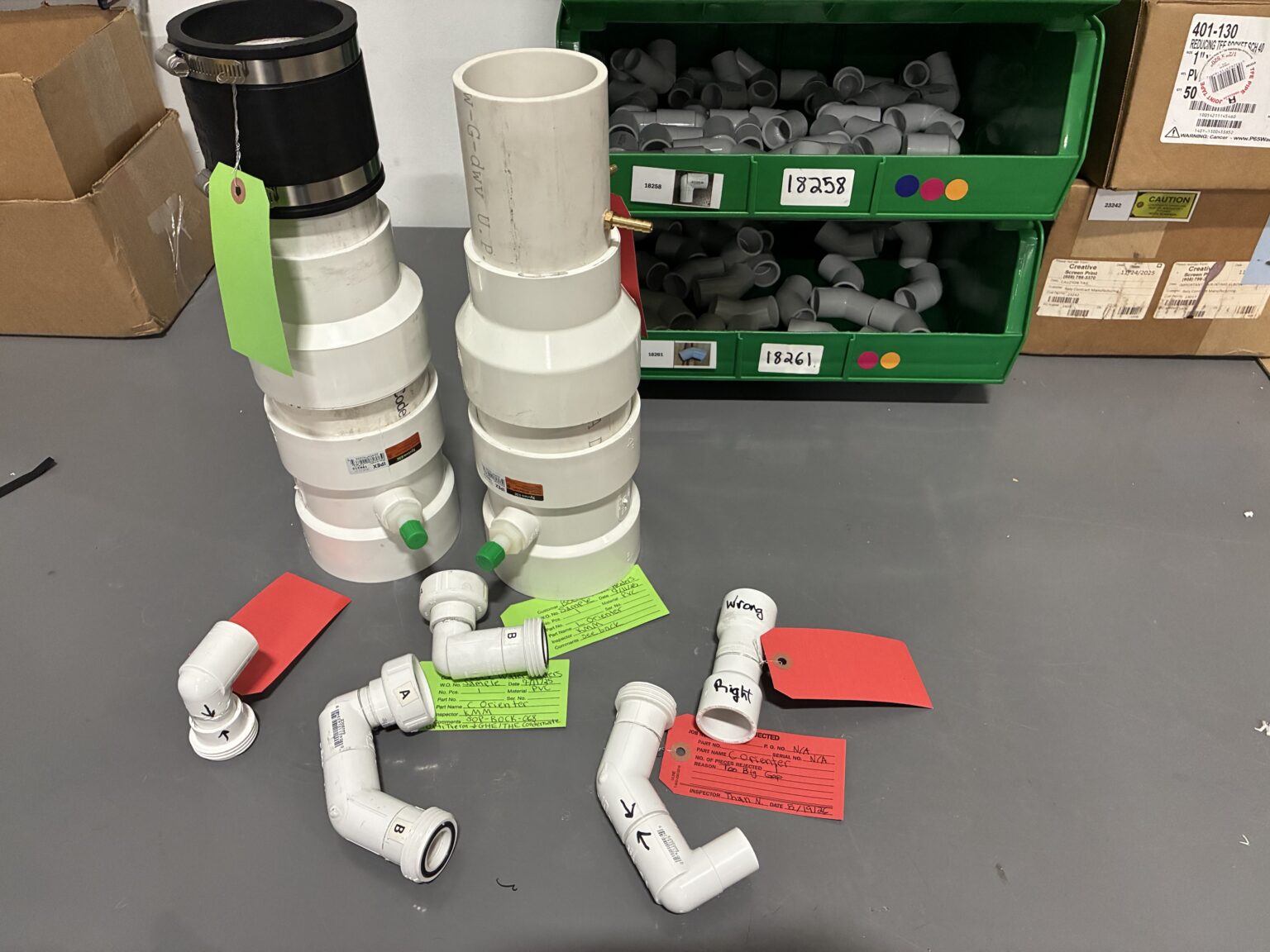
- A water heater manufacturer tripling sales was pulling its most experienced assemblers off the main line to build PVC subassemblies. Staging crowded out production space, and sourcing was spending unsustainable time expediting components.
- What RELY owned
- Turnkey assembly of intakes, exhausts, condensate traps, drain elbows and related subassemblies, component procurement across 150+ SKUs, and prototype, production and warranty kits.
- What RELY did
- Shipped kits ready to crate with the customer’s QC checklist, managed quality of inherited raw-material suppliers with 8Ds shared with the customer, and kept inventory visible across 21 kit configurations.
- Result
- 2,400+ subassemblies and about 250 kits per month, a 2,000 sq ft subassembly area shut down at the customer, and 700 assembly hours saved in the first three months.
- 2,400+
- Subassemblies per month
- 2,000
- Sq ft of customer space freed
- 700
- Assembly hours saved, first three months
- 21
- Kit configurations managed
Source: RELY Case Study No. 20. Adjacent home and building products proof; figures apply to this program only.
Accessories and supplier complexity
One finished kit. Fewer component handoffs.
A hardware kit can involve several suppliers before the first bag is sealed. Someone has to confirm quantities, follow up on shortages, receive components, control inventory and keep each configuration aligned to the BOM. Where procurement is included, RELY can manage that component flow along with the build, verification and packout.
| Work | What it costs in-house | How RELY runs it |
|---|---|---|
| Hardware and installation kits | Counting, bagging and label errors spread across many SKUs | Built to the approved BOM, counted, labeled and verified before sealing |
| Accessory and add-on kits | Variations by model, finish or retailer | One pack definition per configuration, controlled by revision |
| Subassemblies | Skilled assemblers pulled off final assembly | Built to the print with checks at the station and operator sign-off |
| Bundled products | Staging space and double handling | Built and packed in one flow, from receipt to shipment |
| Retail packouts and resets | Fixed ship dates and retailer labeling rules | Channel requirements reviewed and built into the packout |
| Store-ready displays | One pickup window per distribution center, and no room for a short or damaged display | Built to a released work instruction, staged by PO and shipped in waves, with exceptions handled during the build |
| Relabel and repack | Rework of finished stock during a packaging change | Relabeled or repacked to the approved revision, with counts reconciled |
Agree whether materials are customer-supplied, consigned or purchased by RELY, along with replenishment responsibilities and treatment of excess or obsolete stock. Scope and verification points are agreed for each program during quoting.
Where RELY fits
Build it, kit it, pack it, ship it.
Subassemblies and final assemblies.
Frames, brackets, bases, mechanisms and accessory subassemblies built to the approved revision, in Menomonee Falls or inside your plant.
Explore contract assembly and subassembly → Hardware & product kittingHardware and accessory kits, verified to the BOM.
Fastener, fitting and accessory kits, installation and service kits, and kits that include subassemblies RELY built.
Explore hardware and product kitting → Packaging & displaysRetail packouts, bundles and store-ready displays.
Retail-ready packouts, bundles, floor displays and channel labeling, shipped to distribution centers, retailers or end customers.
See contract packaging and displays → Value-added manufacturingRelabel, repack and reconfigure.
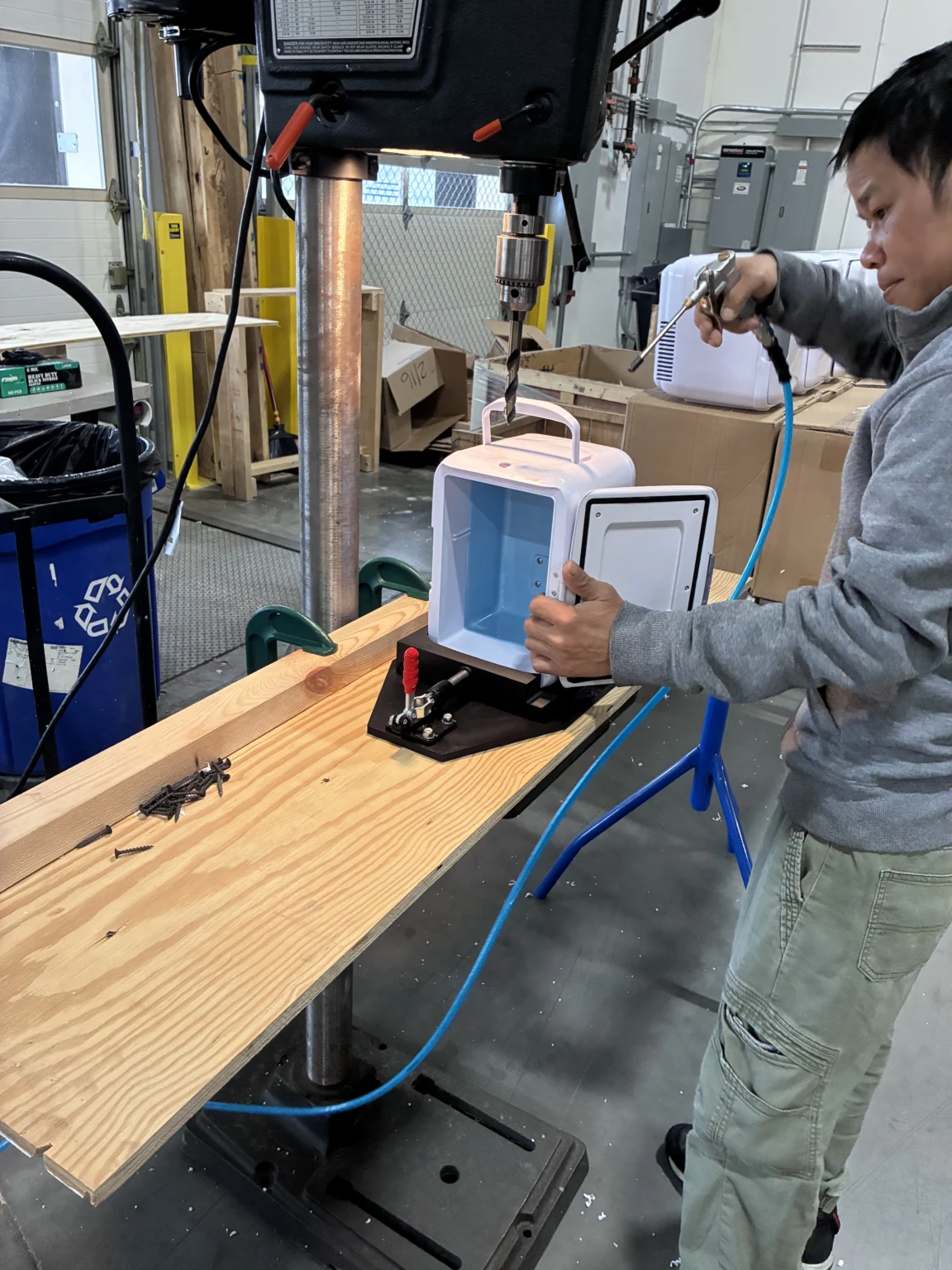
Packaging changes, label revisions, product preparation, drilling and light assembly steps, and returns recovery, run to approved instructions.
Explore value-added services →Programs RELY can take on
Catalog work that fits the RELY model.
- 01Fastener and fitting kits
- 02Accessory kits by model or finish
- 03Installation and service kits
- 04Frame and bracket subassemblies
- 05Bases, mechanisms and sub-builds
- 06Bundled multi-piece products
- 07Retail packouts and store-ready floor displays
- 08Relabeling for a packaging change
- 09Cutting, drilling, taping and fastening steps
- 10Inspection and rework of held stock
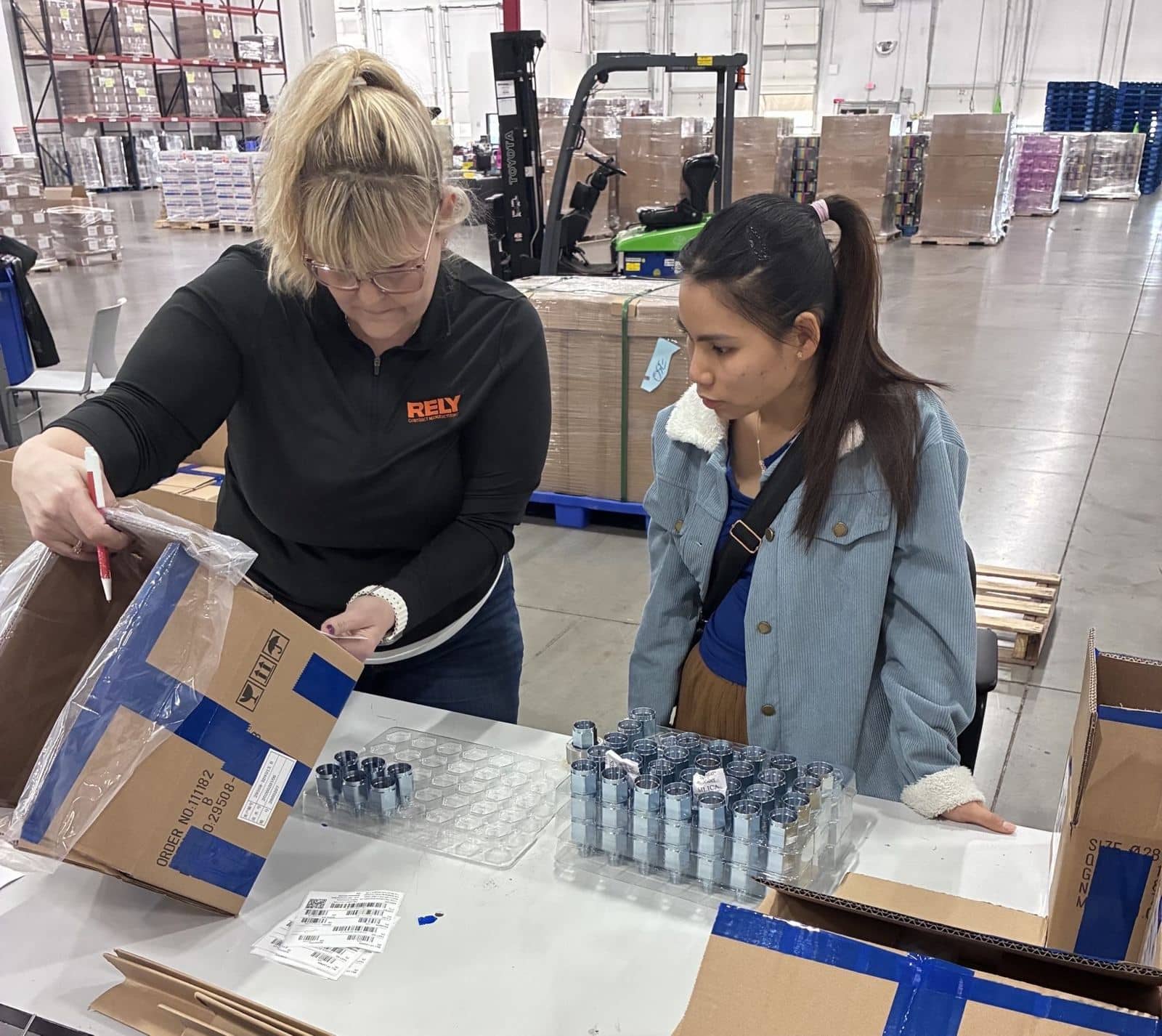
RELY works to your BOM, drawings and pack specs. Materials can be customer-supplied, RELY-procured or a hybrid of the two.
How the work is controlled
The right parts, in the right bag, checked before it ships.
- 01
BOM-driven kit definitions
Each kit is tied to its approved BOM, quantities and revision before the first one is built.
- 02
Count and label verification
Counts and labels checked before sealing, with barcode checkpoints between receipt and shipment.
- 03
Picture work instructions
Visual instructions at the station, with pass and fail references for finish, damage and fit.
- 04
Operators signed off to the build
Trained and signed off on the specific kit or subassembly before they run it.
- 05
Controlled revisions
Packaging versions, substitutions and model changes introduced through an agreed change path.
- 06
Supplier issues surfaced early
Incoming component problems documented and escalated. In Case No. 20, 8Ds were shared with the customer.
Scope and responsibility
RELY builds and checks. You own the catalog.
The build, the kit and the check.
- Work instructions, training and supervision
- Kit and subassembly builds to the approved BOM
- Count, label and inspection checks
- Component procurement where agreed
- Packout, labeling and shipping in scope
The product, the catalog and the brand.
- Product design, finishes and specifications
- BOM and packaging approvals
- Retailer relationships and channel decisions
- Engineering and packaging changes
- Disposition of nonconforming product
Questions furniture and hardware buyers ask
Short answers. Full answers in the FAQ.
Can RELY build hardware kits for a large catalog?
Yes. RELY builds fastener, fitting, accessory, installation and service kits to an approved bill of materials for each configuration, with sequenced workflows and defined checks. Revisions, substitutions and packaging versions are controlled so a catalog change does not become a kitting error. In Case Study No. 11, RELY completed a 300,000-kit hardware installation kit program, with packaging coordination, subcomponent preparation, assembly and scheduled releases managed together.
Read Case Study No. 11How does RELY keep missing or wrong parts out of kits?
Verification is built around the approved BOM, required quantities, revisions, labeling and packaging instructions, with barcode checkpoints and inspection steps before the kit is sealed. The goal is to keep missing, incorrect or obsolete components from reaching your line or your customer.
Full answer: verifying kit contentsCan RELY buy the components, or do we supply them?
Either, or both. Programs run on customer-supplied materials, RELY-procured materials or a hybrid. The quote defines who buys each component, approved sources, inventory ownership, replenishment, shortages, engineering changes and excess or obsolete material.
Full answer: materialsCan RELY build a subassembly and put it in the kit?
Yes. RELY can build a subassembly, inspect it, combine it with purchased or customer-supplied components and pack the finished kit in one flow. That removes a handoff between separate assembly and kitting providers.
Full answer: building parts into kitsCan RELY repack or relabel stock for a retail reset?
Yes. RELY relabels, repacks and reconfigures existing inventory to the approved new revision, builds retailer labeling requirements into the packout, and reconciles counts before stock ships.
See repackaging and relabelingCan RELY build store-ready retail displays?
Yes. In one 2026 program, RELY built and shipped 1,720 floor displays to 15 retailer distribution centers for a national tool brand, handling receiving recounts, assembly to a released work instruction, staging, shipping waves and exceptions such as a shortage, repairs and a split load. Tell RELY what has to arrive store-ready and when it has to ship.
Read the display programIs there a minimum order quantity?
Minimums are program-specific. Setup, tooling, material procurement, changeover, cycle time and release frequency all affect the practical minimum, and a pilot quantity can be very different from the most economical recurring quantity.
Full answer: minimum order quantitiesSend us the kit that causes the most trouble.
Start with one kit family, one subassembly or one display program, and show us where the work is getting stuck. A BOM, a photo or a sample is enough for a first review.
- Product or kit family
- Parts per kit
- Monthly or annual volume
- Target start
- Where it is built today
info@relycm.com · Parts on hold: 262.853.1634