RELYAcross services·Service parts & aftermarketOEM service parts
For OEM aftermarket, sourcing and operations teams
OEM Service Parts & Aftermarket Manufacturing
Replacement assemblies, spare parts, service and repair kits, and legacy-product support for equipment manufacturers.
Keep supporting your equipment. Free your production team to focus on what comes next.
RELY assembles, kits and packages OEM service parts from our Menomonee Falls, Wisconsin facility in the Milwaukee area. We support recurring replacement assemblies, service and repair kits, and legacy-production transfers using approved specifications, quality controls and an agreed release schedule.
ISO 9001:2015 certified for contract manufacturing and assembly · Menomonee Falls, Wisconsin
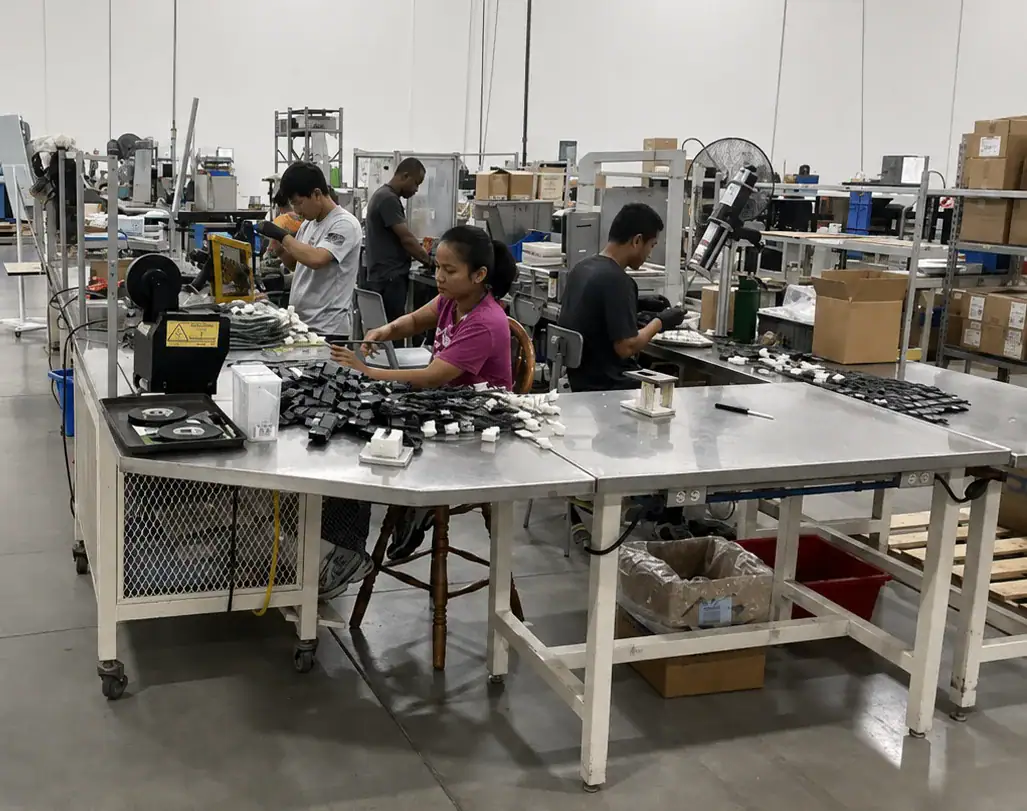
Washer lid switch line · RELY floor
Relevant transfer evidence · Case Study No. 21
Three legacy product lines. One accountable manufacturing partner.
When an incumbent supplier exited a major appliance OEM’s legacy program, RELY took on tooling requalification, supplier and BOM coordination, and production readiness.
- 3
- Legacy product lines transferred
- 10
- UL part numbers requalified and PPAP approved
- 85
- Raw-material and component SKUs planned and stocked
RELY Case Study No. 21. These figures describe one legacy-transfer program, not companywide capacity or a delivery commitment for another program.
What a legacy program actually asks of the next supplier.
- 01 · Component continuity
The parts behind the part.
85 raw-material and component SKUs had to be planned and stocked, 20 of them routed through more than one supplier before reaching RELY. A service-parts program is only as dependable as the supply chain under it.
- 02 · Obsolete materials
The specified resin no longer existed.
The molding supplier had none left. RELY went to the resin manufacturer and identified two replacements meeting the full UL specification. Both became PPAP-approved primary and secondary options, with approval staying with the customer.
- 03 · Inherited tooling
The tooling failed on the first order.
The inherited custom anvil failed on the first production order. RELY brought in an outside machine shop after hours, worked the recovery from Friday into Monday and shipped 400 finished parts the following Monday, then ordered three replacement anvils as the permanent correction.
- 04 · Recurring responsibility
The move is the start, not the finish.
After requalification, the program runs on a weekly production cadence. Taking on a legacy program means owning supply, tooling and output after the first shipment, not just running transferred equipment.
Where service-parts work stops fitting
Your installed equipment still needs parts. Your production floor needs room to grow.
Service-parts work can remain important after it stops fitting your main production schedule. The question is which work can move and what must stay controlled.
Situation 01
Service parts compete with current production
Move defined replacement assemblies or kit families into an agreed production and release plan rather than fitting every service order around new-product builds.
Situation 02
An incumbent supplier no longer wants the program
Review the available drawings, tooling, inventory, component sources and qualification requirements before moving manufacturing responsibility.
Situation 03
Too many configurations are consuming attention
Build and identify assemblies or kits against the approved bill of materials, revision and packaging specification.
Situation 04
A product line has ended, but field demand continues
Evaluate legacy service-parts manufacturing around actual demand, component availability and the remaining condition of the process and tooling.
Service-parts support is not limited to discontinued equipment. Current product platforms need replacement assemblies and service kits too.
Program scope
Replacement assemblies, service kits and legacy production
Replacement assemblies and subassemblies
Mechanical and electromechanical replacement-parts assembly, including appropriate control-box, electrical-module and related builds. We review the operations, fixtures, inspection and testing needed before confirming scope.
OutputCompleted assemblies checked to the agreed requirements.
Explore contract assembly →Service, repair and maintenance kits
Service and repair kits can combine approved components, hardware, RELY-built assemblies, labels and customer-approved instructions. Repair, maintenance and retrofit kits are defined by their approved bills of materials and packaging requirements.
OutputThe specified contents and quantities, verified and packaged for the intended service task.
Explore kitting and packaging →Legacy service-parts manufacturing
Recurring production for established part families that need a different manufacturing home. Before RELY accepts the program, we review documentation, component availability, process knowledge, customer-owned equipment and qualification requirements.
OutputOngoing production of approved legacy assemblies, with scheduled releases and documented controls.
Explore production transfers →Aftermarket assembly, packaging and releases
Combine appropriate assembly, inspection, identification and packout operations for the OEM’s aftermarket distribution needs. Shipping destinations, stocking arrangements and release responsibilities are established for the program.
OutputIdentified product or kits prepared for the agreed next destination.
Operating model
Define how the program will run after the first shipment.
A purchase order alone does not define an ongoing service-parts program. Agree on the manufacturing, material and release responsibilities before committing the schedule.
| Decision | What the program establishes |
|---|---|
| Product definition | Approved BOMs, drawings, revisions, instructions and change authority. |
| Components and suppliers | Customer-supplied, RELY-procured or hybrid materials; approved sources and shortage escalation. |
| Production and releases | Build quantities, expected demand, shipment releases and applicable minimums. |
| Quality and traceability | Inspection, testing, identification, records and approval gates required for the work. |
| Packaging | Kit contents, quantity checks, labels, instructions and packout requirements. |
| Inventory | Ownership, agreed stock levels, replenishment and excess or obsolete material responsibility. |
| Communication | Program contacts, reporting cadence, exceptions and approval responsibilities. |
A production batch and a shipment release do not always need to be the same size. We review the manufacturing and inventory implications together.
Who keeps control
Transfer the manufacturing work, not control of your product.
Your company retains its product definition and design approval authority. RELY takes on the manufacturing responsibilities defined for the program. Customer-owned tooling and equipment can be evaluated for transfer, with condition, installation, maintenance, ownership and return responsibilities documented.
See how transfers are scopedHow programs start
From program review to recurring production.
Scope the part family
Start with the assemblies or kits, expected demand, current supply problem and required timing. Detailed documents can follow an NDA when appropriate.
OutputInitial fit and information needed for a detailed assessment.
Establish the manufacturing plan
Review operations, component sources, equipment, documentation, packaging, quality requirements and commercial responsibilities.
OutputDefined scope and launch requirements.
Validate and approve
Agree on the pilot, first-article, testing or PPAP requirements that apply. Transfers also need an inventory and cutover plan suited to the program.
OutputEvidence and approvals required before routine production.
Run and control changes
Manage the agreed production and release schedule, report exceptions and handle engineering or material changes through the defined approval process.
OutputAn operating cadence and a controlled change path.
Quality and qualification
Quality requirements belong in the manufacturing plan.
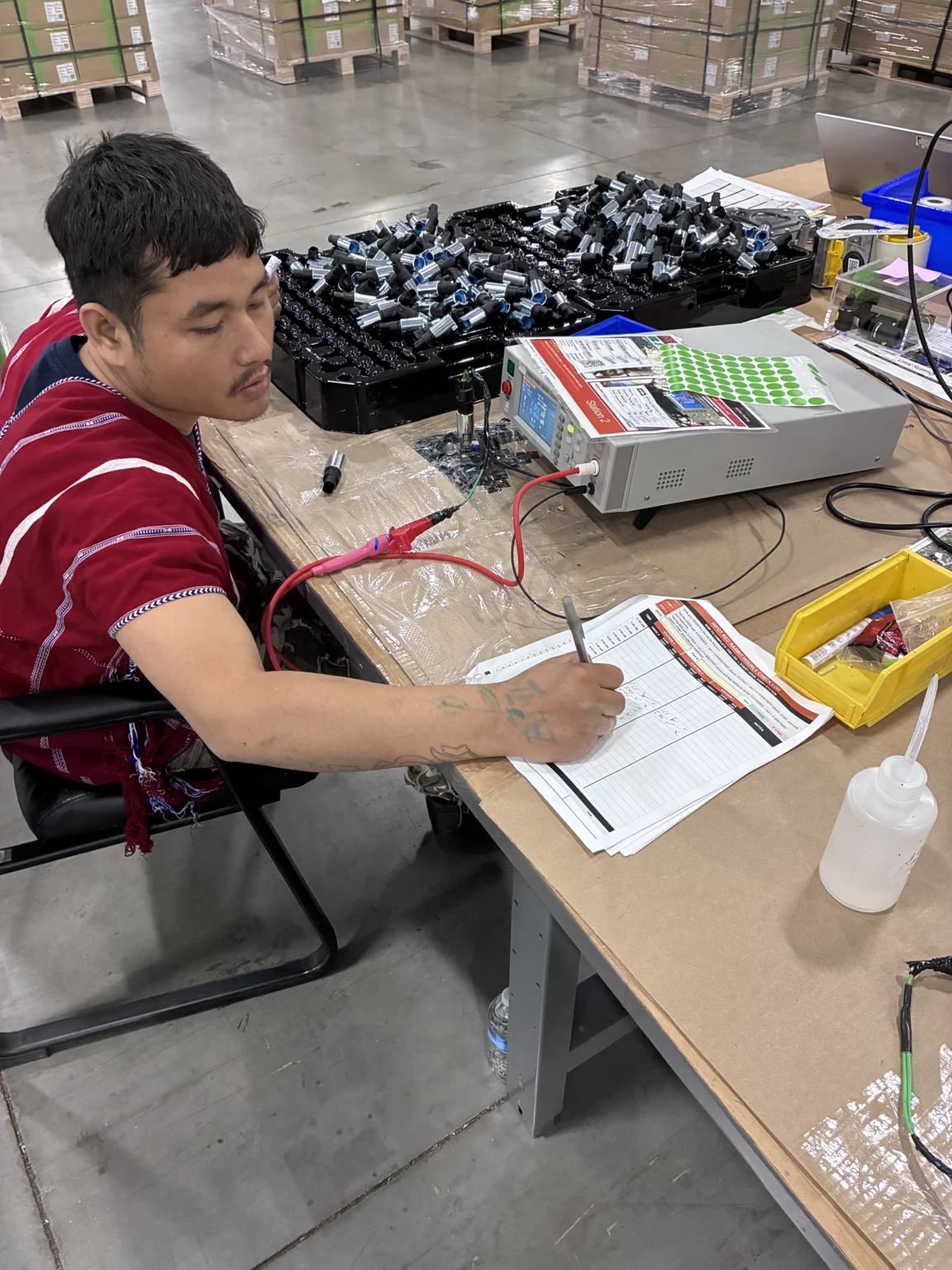
RELY’s quality management system is ISO 9001:2015 certified for contract manufacturing and assembly. Program requirements determine the inspection, testing, traceability and approval records needed for your parts.
Approved instructions, operator training, defined checks and change controls support repeatable execution. Product-specific listings and customer approvals are reviewed for the actual scope, not assumed from another program.
Need a supplier survey or quality questionnaire completed? Include it with your inquiry.
Related assembly and kitting evidence · Case Study No. 20
Moving defined work can give the main line room to grow.
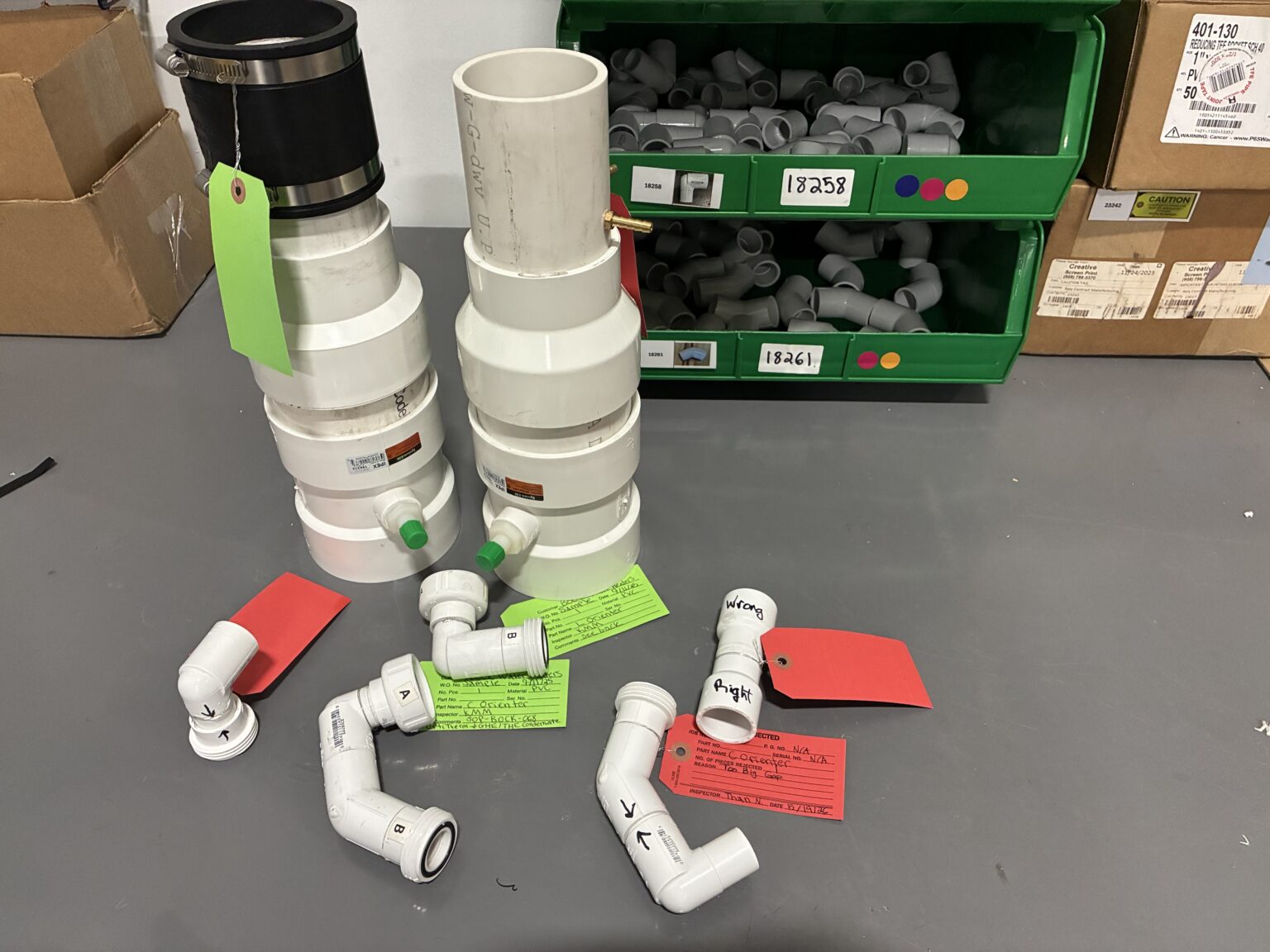
In a broader program for a water heater manufacturer, RELY took on subassembly production, component procurement and kitting as the customer expanded.
- 2,000sq ft
- Customer production space released
- 700hours
- Customer assembly hours saved in the first three months
RELY Case Study No. 20. These results cover that broader assembly and kitting program, not service-parts-only output or guaranteed savings.
Supporting example · Staged releases · Case Study No. 11
A stocking arrangement depends on release discipline. In a 300,000-kit hardware program for a national industrial distributor, RELY staged finished kits and shipped full 40,040-kit lots on the customer’s release schedule, then the final balance in August 2026. It was a kitting program, not a service-parts program, but the staging and release control carry over directly.
Read Case Study No. 11Location
A Wisconsin manufacturing partner for Midwest OEM programs.
RELY operates from a 52,000-square-foot facility in Menomonee Falls, in the Milwaukee area. Wisconsin and Midwest OEMs can review the work in person and arrange a facility visit as part of supplier evaluation.
RELY also supports OEM programs outside Wisconsin when program fit and logistics make sense. A service-parts relationship can grow alongside broader contract assembly, kitting and production-transfer work.
Services this program draws on
Contract Assembly & SubassemblyMechanical and electromechanical assembly built to approved specifications, including replacement assemblies.View service → Kitting & Kit AssemblyKits, packaging and packout for service and aftermarket programs.View service → Production TransferMoving a defined program, including customer-owned equipment, into RELY.View service →Questions buyers ask
Questions about OEM service-parts manufacturing
What does OEM aftermarket manufacturing mean here?
Manufacturing and kitting for an equipment manufacturer’s own post-sale parts business: the service, replacement, repair and spare parts that support equipment already in the field. RELY supports defined OEM programs. It does not sell third-party replacement products or maintain a consumer parts catalog.
Can RELY support low-volume or intermittent demand?
Yes, when it is planned by part family. Programs are evaluated by annual demand, setup effort, component buys and release frequency. A low-usage part is usually most economical when it is built alongside related parts in its family, with build quantities sized to the setup and component purchases, and releases shipped from agreed stock as orders arrive. Minimum runs and stocking arrangements reflect the actual work.
Can we supply the components?
Customer-supplied materials, RELY purchasing and hybrid arrangements are available. The scope establishes purchasing, approved sources, inventory ownership and how shortages are handled.
Can our existing equipment or tooling move to RELY?
It can be evaluated. Condition, utilities, safety, maintenance, installation and required qualification are reviewed before the transfer is agreed. Ownership and other responsibilities are documented.
How production transfers are scopedCan RELY support discontinued equipment?
Legacy and discontinued-product programs can be considered when there is an achievable manufacturing and material-supply plan. Missing documentation, obsolete components and required approvals must be addressed during scoping.
What happens when a component or material goes obsolete?
RELY identifies the gap, finds qualified alternatives and brings them to you for approval. In Case Study No. 21, the specified resin was obsolete with no supplier stock left; RELY worked with the resin manufacturer to identify two replacements meeting the full UL specification, and both became PPAP-approved options. No substitution is made without your approval.
Read Case Study No. 21Are manufacturing lead time and shipment lead time the same?
No. Shipping available, approved inventory differs from procuring components and producing a new batch. The program should distinguish those commitments and determine whether a stocking arrangement is appropriate.
What do we need for an initial conversation?
Start with the type of assembly or kit, approximate demand, number of part numbers, current supply problem and desired timing. A complete RFQ is not required for an initial fit discussion. Request an NDA before sharing proprietary details when needed.
Start with one part family. Define the program around it.
Describe the part family, the supply problem and the timing. It can be one replacement assembly, one kit family or one legacy program. We will review the scope, supply requirements and transition and tell you plainly whether the work is a fit.
Or call 262.276.0050 · info@relycm.com
A complete RFQ is not required for the initial conversation. Need an NDA first? Start there.