RELYService family·Electrical assemblyControl panels & wire harness
For engineering, quality and supply chain
Electrical Assembly, Control Panels & Wire Harnesses
Control panels, control boxes and harnesses that arrive ready to install, not ready to diagnose.
Control panel, control box and enclosure assembly, plus build-to-print wire harnesses and cable assemblies, built to your drawings, schematics and BOMs. Harness workmanship is IPC/WHMA-A-620 aligned, and every completed harness is 100% continuity tested.
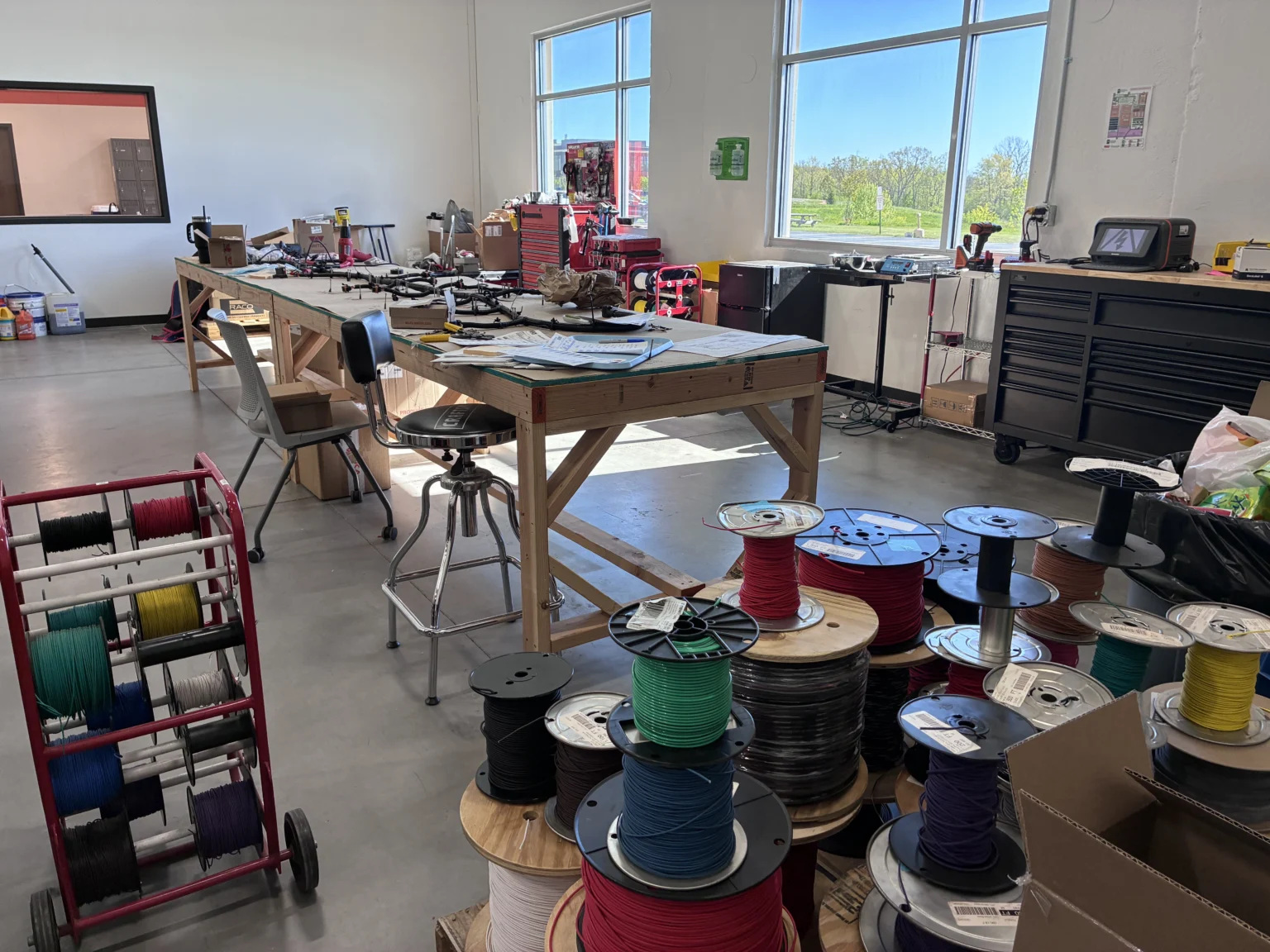
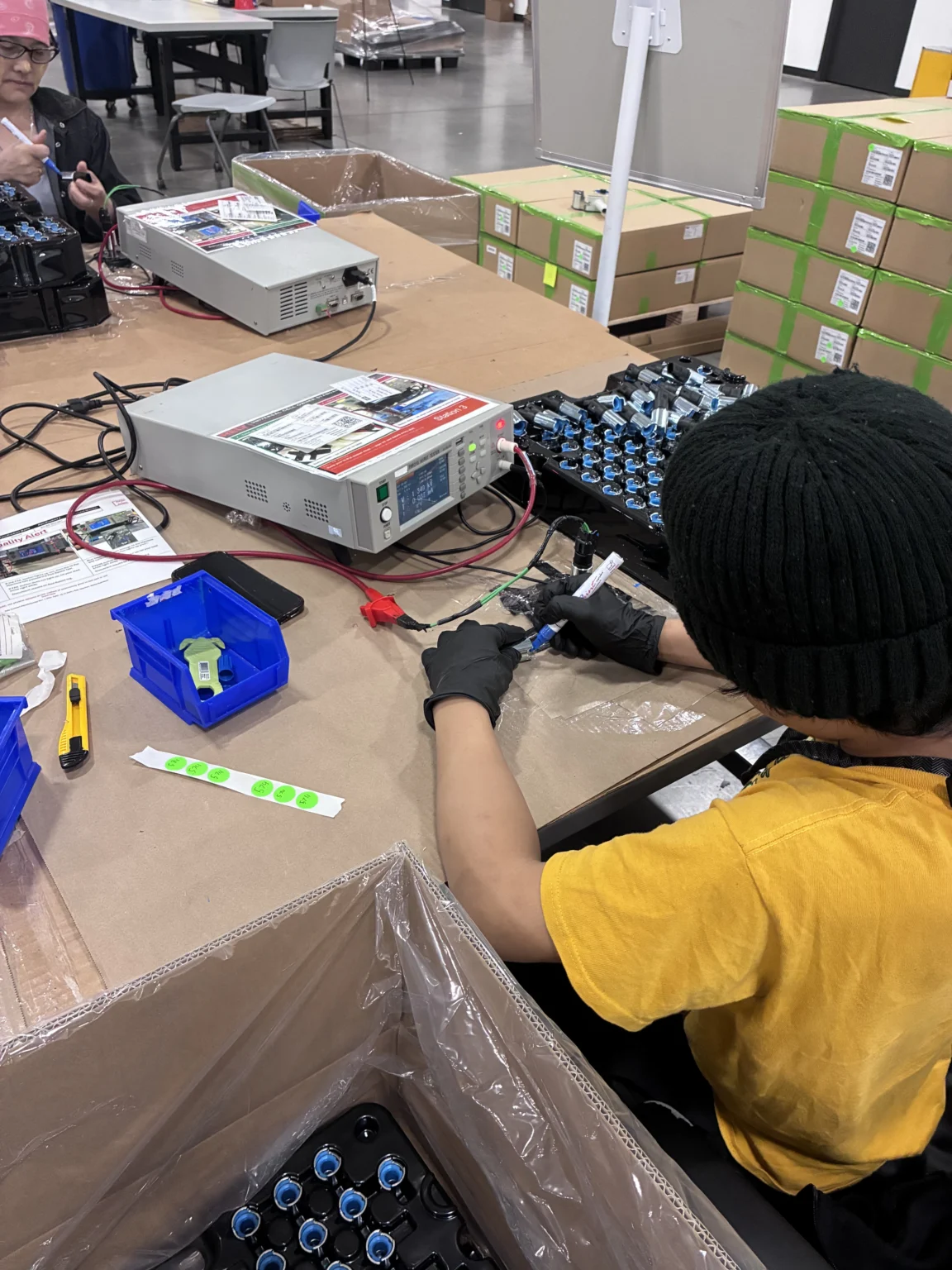
Electrical assembly area · RELY floor
Two ways in
Panels and boxes, or harnesses and cables.
Both are built to your drawings, schematics and BOMs, with agreed checks before release. Start with the work that is tying up your team.
Path 01 · Control panels, boxes & enclosures
Same layout, same wire path, every unit.
Component mounting, DIN rail, terminal blocks, wiring and circuit labeling, with final electrical verification. In Case Study No. 20, control panel assembly became Phase 2 of a water heater manufacturer’s subassembly program.
See panel and box assemblyPath 02 · Wire harnesses & cable assemblies
Built to print. 100% continuity tested.
Prototype through production harnesses, 8 to 22 gauge, IPC/WHMA-A-620 aligned workmanship. In one thermal management program, RELY built 174 harnesses across 28 SKUs in 2025.
Check the harness specsHarness specs, up front
Can RELY build it? Check before you call.
From simple cable assemblies to harnesses with hundreds of components. Anything outside this range can be reviewed from the drawing or a sample, and we will tell you plainly if it is not a fit.
| Capability | Current scope |
|---|---|
| Wire gauge | 8 through 22 gauge, multiple colors |
| Jacket materials | PVC, GXL, TXL, silicone, TPE |
| Connectors | Current examples: Bosch, Delphi/Aptiv, Deutsch, Molex, TE/AMP. Others reviewed per application. |
| Protection | Woven braid, slit conduit, solid conduit, heat-shrink tubing, spiral wrap |
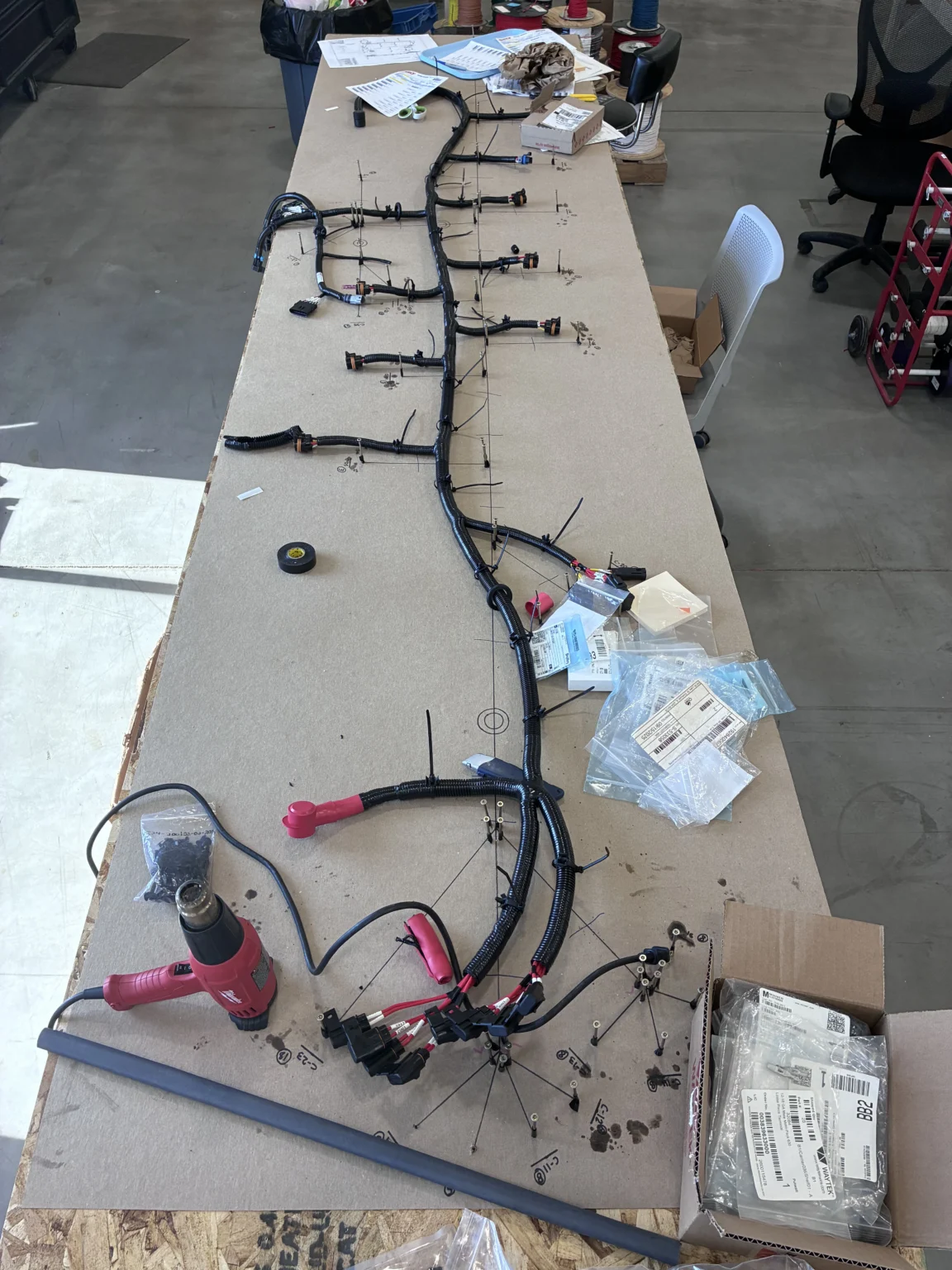
| Build method | Custom build boards made from customer prints |
| Identification | Labeling and circuit identification to customer specification |
| Workmanship | IPC/WHMA-A-620 aligned |
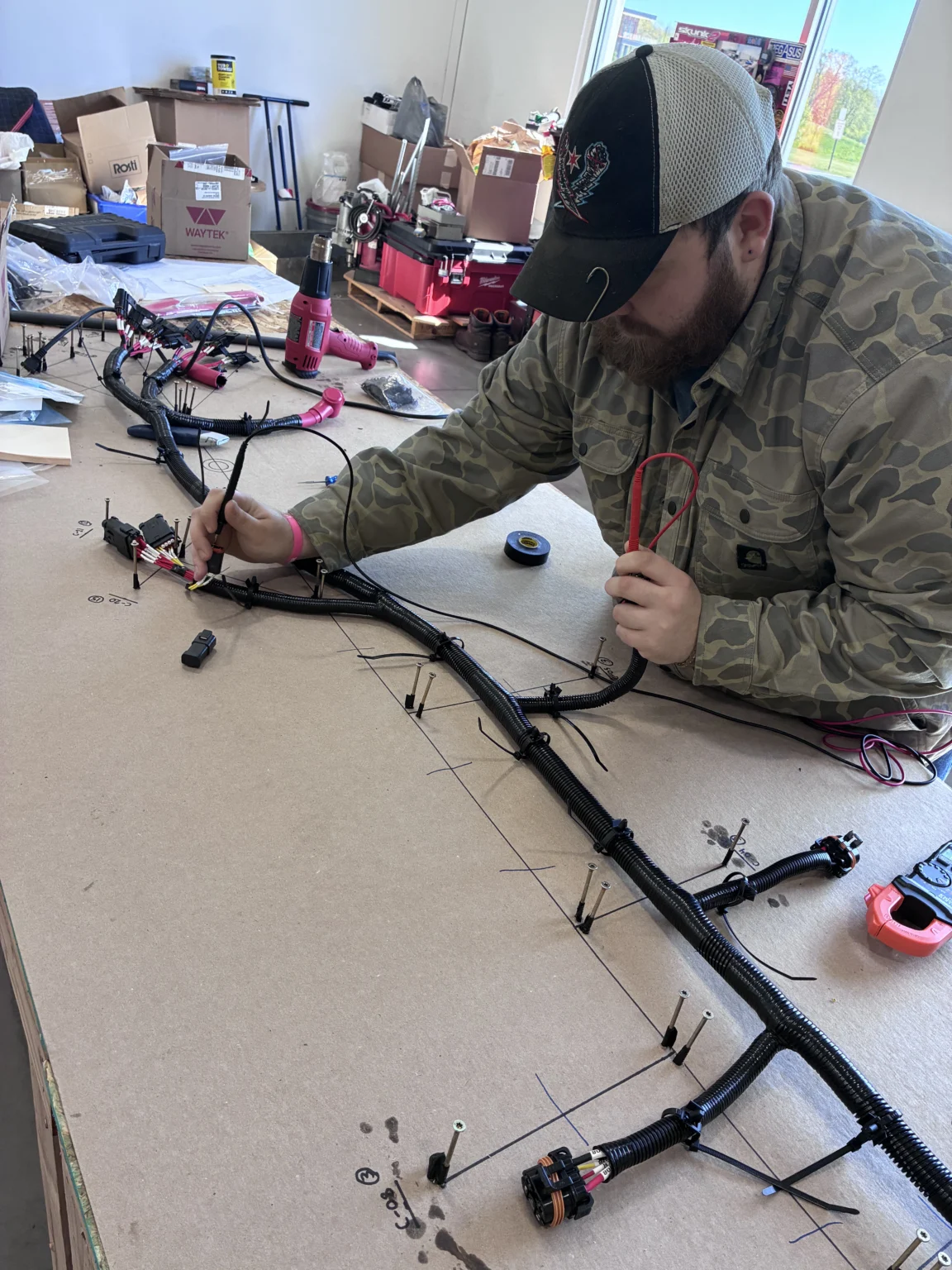
| Testing | 100% continuity testing on every completed harness. Other tests defined by the program. |
| Typical lead time | About 10 business days once required components are procured |
Lead time depends on component availability and program requirements. Prototype, urgent, high-complexity, transferred or material-constrained programs may differ; the quote and launch plan govern.
Harness program basics
Verification
100%
Of completed harnesses continuity tested
Range
8-22
Wire gauge, current supported range
Lead time
~10
Business days typical, once components are procured
Workmanship
A-620
IPC/WHMA-aligned build standard
From RELY’s published capabilities and FAQ. Continuity testing confirms circuits; it does not by itself verify every mechanical, insulation, environmental or field requirement.
Scope
What RELY builds, and who owns what.
Panels & enclosures
Assembly to drawings.
Component mounting, DIN rail, terminal blocks, wiring and circuit labeling to your drawings, schematics and BOMs, with agreed inspection and testing.
Harness & cable
Manufacture to print.
Prototype, engineering builds, low-volume and production harnesses, cable assemblies and rework. Programs can stand alone or feed assemblies and kits.
Design authority
Stays with you.
Product design authority remains with you or your engineering owner unless a separate scope says otherwise.
Testing
Defined by the program.
Continuity on every harness. Custom test boards, mating harnesses and other electrical tests are added when the application requires them.
Listings
Reviewed at RFQ.
Product-listing or certification requirements are reviewed at the RFQ stage. RELY does not imply a listing outside its approved scope.
Testing & traceability
Verification built into the build, not bolted onto the end.
Continuity testing and the agreed workmanship and inspection checks help identify defects before release. Additional tests are defined by the application and customer requirements.
Continuity
Every completed harness is 100% continuity tested against the print.
Workmanship & visual
Visual and workmanship inspection to the agreed criteria, because continuity alone does not verify mechanical requirements.
Insulation tests when specified
Hi-pot or insulation-resistance testing can be defined for a program. It is not included on every build unless your requirements call for it.
Label verification
Circuit identification and labels checked before release.
Build records
Batch-level build records, with serial-level traceability where your program requires it.
Customer documentation
Customer-specific documentation retained digitally with the build records.

Control boxes & panels
Same layout, same wire path, every unit.
Consistent component placement, defined wire paths, secure terminations and clear labeling, so your team is not troubleshooting wiring differences from one unit to the next.
- Breakers, relays & power supplies
- DIN rail components
- Final electrical verification
- Sensors & terminal blocks
- Torque verification where required
Panel evidence · Case Study No. 20
A water heater manufacturer first moved subassembly production and component procurement to RELY to take pressure off its main line. Control panel assembly followed as Phase 2 of the same program. The case’s published space and labor results describe the subassembly scope; it does not report panel output separately.
Case study · Thermal management wire harnesses
Engineering was building harnesses. RELY took them on.
A thermal management manufacturer’s engineers were building prototype, engineering-build and service harnesses while chasing parts, tooling and print clarifications. RELY took over estimating, procurement, build, test and program management.
- JIT procurement with supplier coordination and min/max replenishment
- A managed catalog of 130+ connector SKUs with engineering change control
- Print review during quoting to flag incompatibilities and print errors before production
- In-house braiding and labeling; 100% continuity testing before shipment
- 174
- Harnesses produced in 2025
- 28
- Different SKUs in 2025
- 300
- Components in the most complex harness
- $20K
- Stagnant inventory eliminated
Source: RELY thermal management wire harness case study. Figures apply to this program only.
Lifecycle support
From first article to the last service part.
- 01
Prototype
Builds that prove the design and the process. New prototype cycles can include materials, tooling and board build.
- 02
Pilot runs
First articles, sign-off and process lock.
- 03
Production ramp
Structured cells and documented work instructions.
- 04
Changes & service
Engineering changes and warranty builds under revision control.
- 05
Transfers & legacy
Harness programs moved from another supplier, starting with a documentation and sample review.
Questions engineers ask
Short answers. Full answers in the FAQ.
How are harnesses tested?
Every completed harness is 100% continuity tested. Custom test boards or mating harnesses can be developed when appropriate. Electrical testing is combined with workmanship and visual inspection, because continuity alone does not verify every mechanical or application requirement.
Full answer: testingWho procures the components?
Either side, or both. RELY can procure components, you can supply or consign them, or the program can use a hybrid. The quote defines who buys what, approved suppliers, ownership and how shortages and engineering changes are handled.
Full answer: materialsCan RELY take over a harness program from another supplier?
Yes. A transfer usually starts with approved drawings, samples, the BOM, open demand, components, build boards, test requirements, tooling and workmanship criteria. RELY identifies documentation gaps, material risks and tooling needs before setting the transfer plan.
Full answer: harness transfersWhat drives lead time?
The standard build target is about 10 business days once required components are procured. Component availability, complexity, prototype or urgent status, transfers and material constraints can change it. The quote and launch plan govern the specific project.
Full answer: lead timeCan we start with one panel or control box family?
Yes. Start with the drawings, schematics, BOM, expected demand and how the unit is tested today. RELY reviews the layout, wire paths, component supply and verification steps, then scopes a first build or pilot before recurring production. In Case Study No. 20, control panel assembly was added as the second phase of an existing subassembly program.
Read Case Study No. 20Does RELY build listed control panels?
RELY assembles control panels, control boxes and enclosures to your drawings, schematics and BOMs. Product-listing or certification requirements are reviewed at the RFQ stage so that no listing is implied outside RELY’s approved scope.
Full answer: control panelsDiscuss your panel, control box or harness program.
Start with a description, the drawing or schematic number, how the unit is tested today and your expected demand. Need an NDA before sharing drawings or BOMs? Tell us first and it is handled before files are exchanged. After first contact, RELY sends a controlled file-sharing link for drawings, BOMs and specifications.